
This is an updated blog post of a previous post. The original is still up and can be found here
Why We Are Not a Cat Removal Service
When someone contacts us about a community cat, they sometimes ask us to trap the cat and move them somewhere else.
While this may sound like a simple solution, Abby Cat Daddy is not a cat removal service. Our goal is to address community cat populations humanely and effectively, not move the perceived problem from one location to another.
Outdoor Cats Have Homes Too
Community cats often have an established outdoor home where they know how to find food, water, shelter, and safety. They may also have relationships with other cats and trusted caregivers in the area.
Removing a cat from this familiar environment can cause significant fear and stress. Cats relocated without a proper transition may try to return to their original territory, become lost, or leave the new location entirely.
Relocation is not as simple as releasing a cat at a barn, farm, or different property. When relocation is truly necessary, the new location must be suitable and committed to providing lifelong care. The cat must also be safely confined at the new location for a minimum of six weeks so they can become familiar with their surroundings and recognize it as home.
Even when every precaution is taken, relocation still carries risks. It should be considered only when returning the cat would place them in serious danger.
Removal Does Not Address the Cause
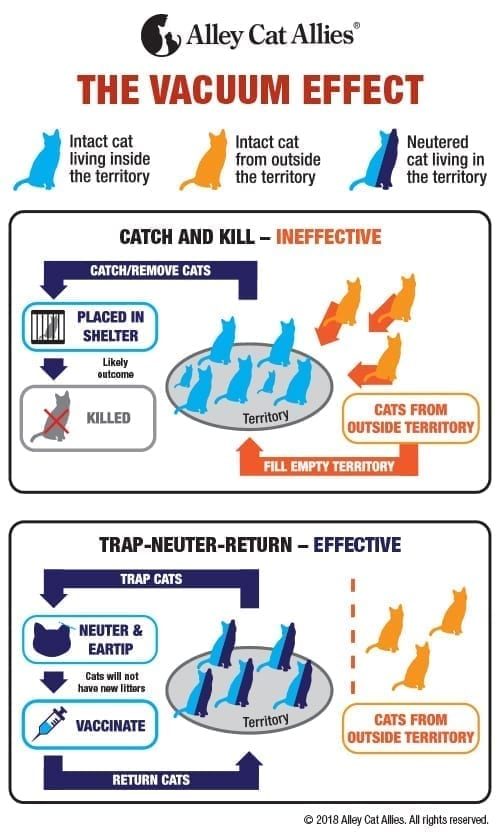
Cats remain in an area because resources are available. These may include food, water, shelter, unsecured garbage, rodents, or people intentionally feeding them.
If cats are removed but those resources remain, other cats may eventually move into the available territory. Any cats left behind may also continue reproducing.
This is often called the vacuum effect.
Removing cats without addressing reproduction and the conditions attracting them may provide temporary relief, but it does not create lasting population control.
Our Approach Is Trap Neuter Return
For healthy, unsocialized community cats living in a safe location, we generally use Trap Neuter Return, commonly called TNR.
Through TNR, cats are:
- Humanely trapped
- Spayed or neutered
- Provided with appropriate veterinary care
- Ear tipped for identification
- Returned to the outdoor location they know as home
Sterilization prevents future litters and can reduce behaviours associated with mating, including spraying, fighting, roaming, and loud vocalizing.
When TNR is performed consistently across a colony, the population can stabilize and gradually decline without repeatedly displacing cats.
The BC SPCA describes TNR as returning free roaming cats to the outdoor locations where they were found after sterilization. Its community cat guidance also explains that TNR can prevent colonies from growing while helping cats become healthier and better neighbours.

When Might a Cat Be Removed?
Not every cat should automatically be returned outdoors.
Removal may be appropriate when:
• The cat is friendly, appears lost or abandoned, and may be suitable for adoption
• The cat requires medical treatment that cannot be safely provided outdoors
• The location presents an immediate and serious threat to the cat
• The property is being demolished or permanently altered
• The cat’s basic needs cannot be met at the location
• A carefully planned working cat placement or other appropriate lifelong home has been confirmed
Each situation must be evaluated individually. A friendly stray cat, an unsocialized community cat, and a lost companion cat may require very different plans.
Removal should be based on the cat’s welfare and the circumstances of the location, not simply because someone does not want to see a cat outside.
Relocation Is Not an Emergency Shortcut
Suitable working cat homes are limited. They must have committed caregivers, daily food and water, appropriate shelter, veterinary care when needed, and a secure confinement space for the transition period.
A rescue cannot responsibly trap a cat first and figure out the plan afterward.
Please do not trap a cat unless you already know:
• Why the cat is being trapped
• Where the cat will be safely held
• Who is responsible for the cat
• Whether a veterinary appointment has been arranged
• Whether the cat will be returned, placed, or assessed for adoption
• What will happen if the original plan falls through
If you want a rescue organization involved, contact the organization and receive confirmation before setting a trap.
Prolonged Confinement Can Affect Their Health
Unsocialized community cats are highly connected to their familiar territory. Being confined in an unfamiliar environment, surrounded by unfamiliar sounds, smells, people, and animals, can cause significant and ongoing stress.
That stress is not only emotional. Prolonged stress can affect appetite, interfere with recovery, contribute to stress related illness, and place additional strain on the body’s immune response. The Feline Veterinary Medical Association recognizes that some outdoor cats cannot have their welfare needs adequately met through indoor confinement.
Short term confinement is necessary for safe veterinary care and recovery. However, once a community cat has been assessed, treated, sterilized, and is medically cleared for release, unnecessarily extending that confinement may cause more harm than benefit.
Returning the cat safely and promptly to their familiar territory, as soon as it is medically appropriate, is generally the healthiest and least stressful outcome.
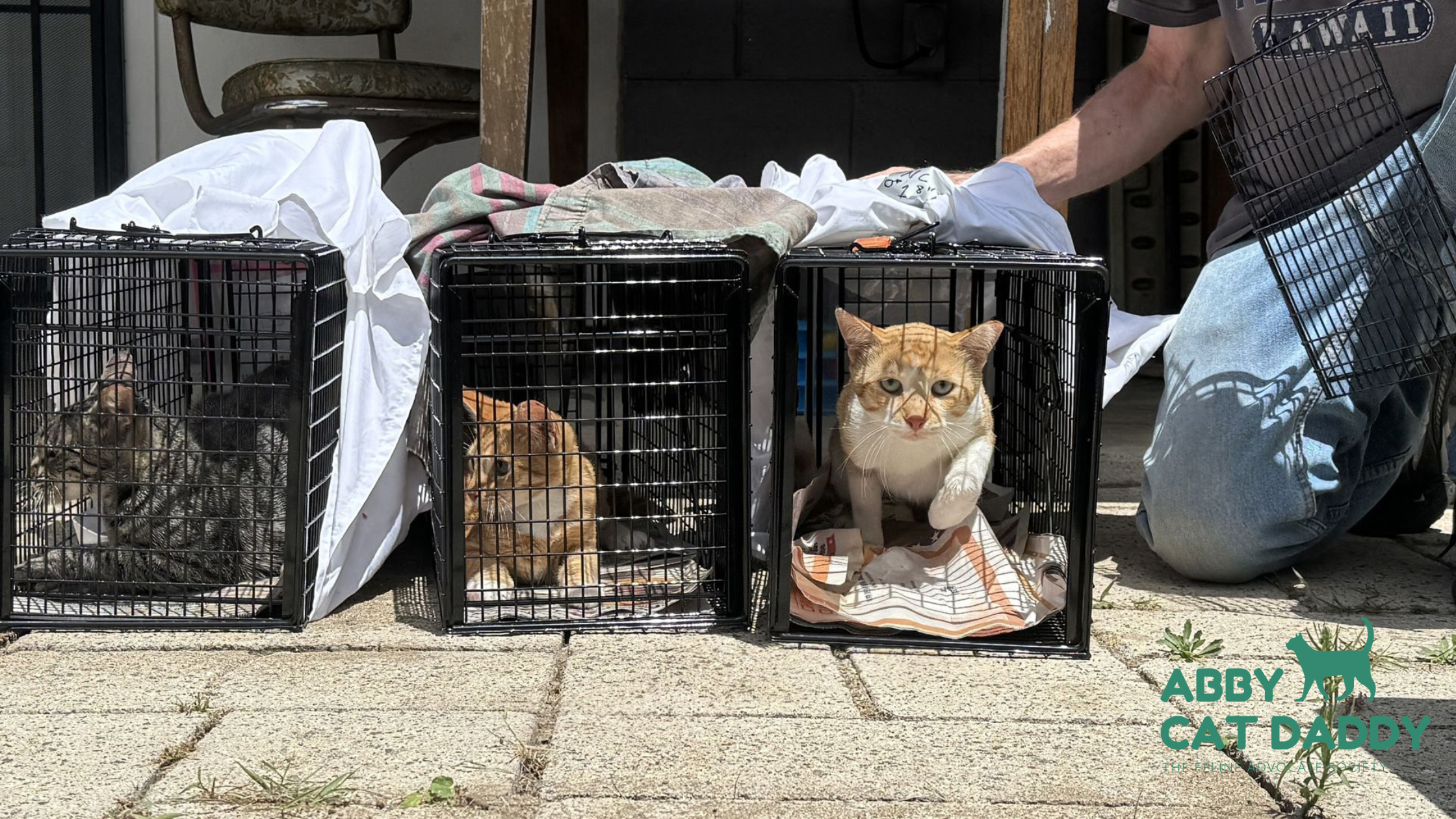
Photo from Neighborhood Cats
Sanctuary Space Is a Limited Resource
Feral cat sanctuaries and other specialized safe placements can provide an important option for cats who cannot safely return to their original location. However, these spaces have limited capacity and cannot serve as a general destination for every community cat someone would prefer removed.
We believe sanctuary placements are best prioritized for cats with exceptional welfare needs. This may include cats living with injuries, disabilities, chronic medical conditions, or other circumstances requiring ongoing care that cannot reasonably be provided in their current outdoor environment.
A healthy community cat should not lose their established home simply because their presence is considered inconvenient or because someone has labelled them a “pest.” When a cat can safely remain in their territory, TNR and responsible colony management are generally more appropriate than using a limited sanctuary placement.
This approach helps preserve specialized spaces for cats who genuinely need the additional protection and care they provide. Placement decisions must always be based on the individual cat’s welfare, the safety of the original location, and the suitability and availability of any proposed alternative.
Community Cooperation Creates Lasting Change
Successfully managing community cats requires more than moving individual animals. It requires sterilization, responsible feeding, clean feeding stations, suitable shelter, monitoring for new cats, and cooperation between property owners, caregivers, rescue organizations, veterinary professionals, and local governments.
Our role is to help create humane, sustainable solutions for cats in the Fraser Valley. Sometimes that means bringing a friendly or vulnerable cat into care. Sometimes it means arranging veterinary treatment. Often, it means returning a sterilized community cat to the only home they have ever known.
We understand that living near community cats can create concerns. We are willing to discuss those concerns and look for practical solutions. However, taking every outdoor cat away is neither a responsible nor sustainable answer.
This is why we are not a cat removal service, and why we are an Advocate Society- we advocate against harmful practices.
Additional Resources
BC SPCA Position Statement on Cat Welfare