
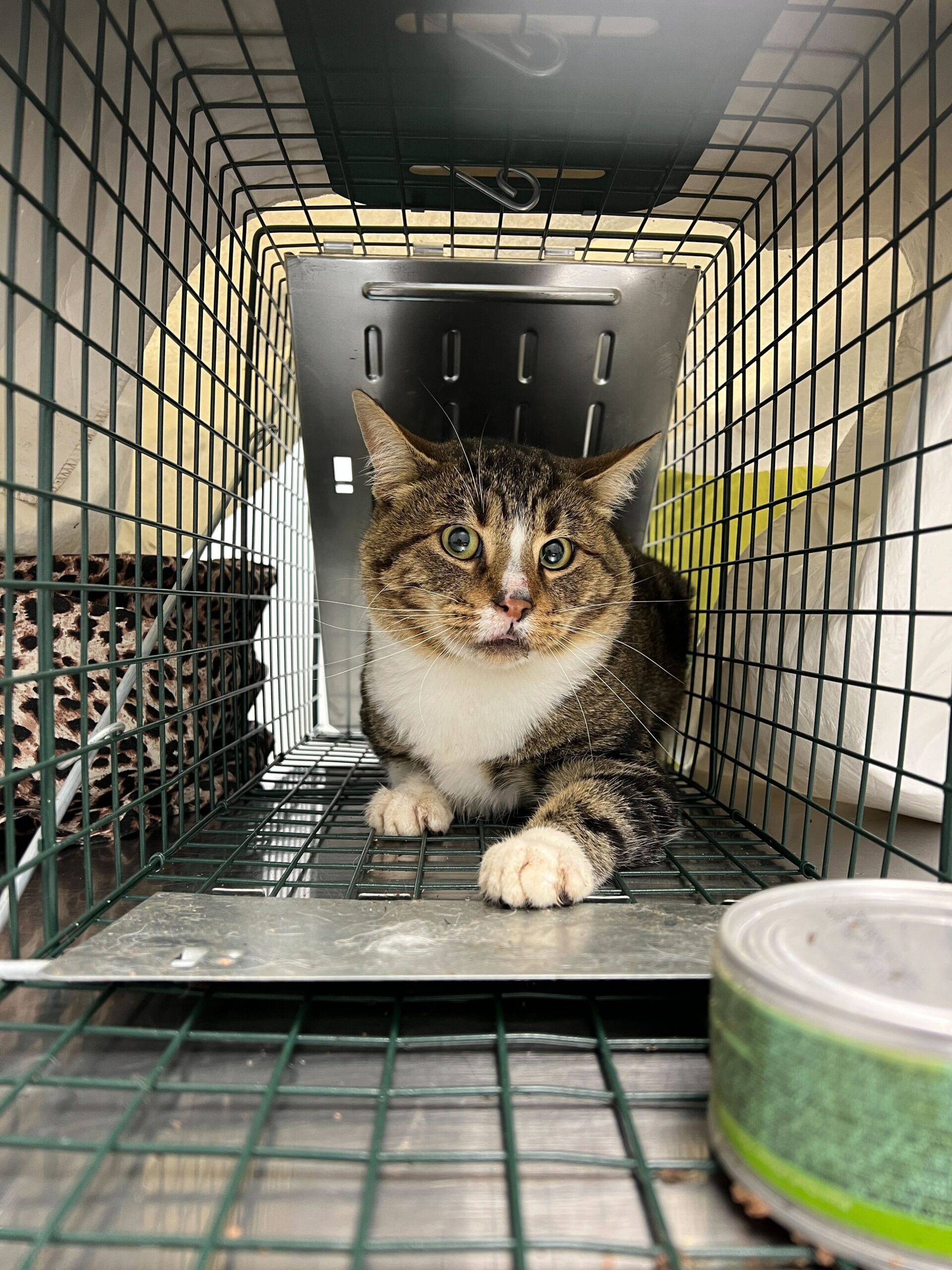
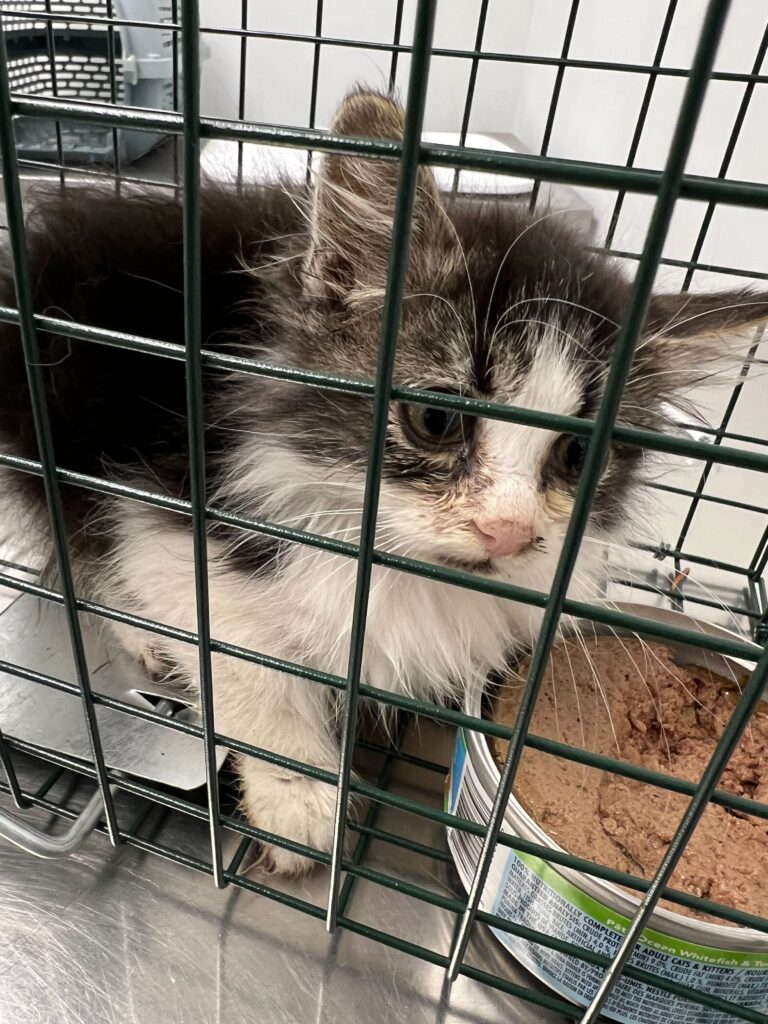
A kitten we recently pulled from a TNR site in the trap still before being reuinited with his brother.
Across the Fraser Valley and throughout Canada, community cat overpopulation is not a “cat problem”—it is a municipal infrastructure problem, a public health problem, and a budgetary problem. As someone who works hands-on with the consequences every day, I see the same pattern in city after city: when local governments fail to invest in accessible spay/neuter and Trap-Neuter-Return (TNR), companion animals, residents, and taxpayers all pay the cost.
But when municipalities partner with grassroots organizations—especially charities like ours that already do the work with minimal overhead—communities see measurable, long-term returns on that investment. This is not speculation. It is evidence-based, cost-effective public policy.
Why Spay/Neuter Is Essential: Health, Welfare & Population Stability
For non-human animals, spaying or neutering is one of the single most impactful interventions we can provide. The benefits are well-documented:
- Reduced risk of disease, including pyometra, testicular cancer, mammary cancer, and infections.
- Decreased behaviours that lead to injury, roaming, and car-strike risk.
- Improved overall welfare, especially for free-roaming and community cats who reproduce rapidly under stressful and resource-scarce conditions.
Unsterilized cats can reproduce at exponential rates—one intact female can produce over 100 kittens in her reproductive lifetime, and her offspring compound the cycle. Without intervention, this creates a pipeline of kittens entering shelters, rescues, municipal intake systems, and public spaces. This is preventable.
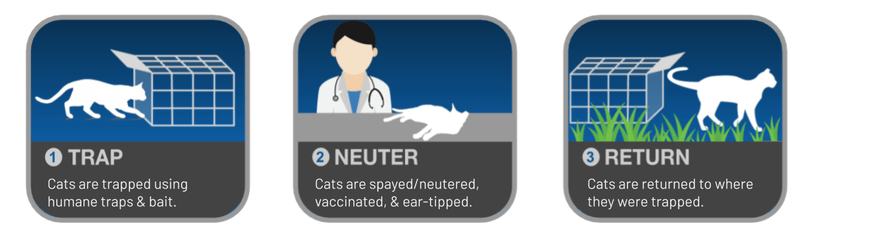
TNR: The Only Evidence-Based Method for Population Reduction
TNR—Trap, Neuter/Spay, Return—is proven to stabilize and reduce colony populations over time. When adult cats are sterilized and returned:
- They no longer reproduce.
- They maintain territory, preventing unsterilized cats from moving in (the “vacuum effect”).
- Colony size declines naturally through attrition.
Jurisdictions across North America—from Los Angeles to Jacksonville to Toronto—have found that TNR reduces shelter intake, decreases euthanasia rates, and dramatically lowers municipal animal control costs. Doing nothing costs far more in the long run.
The Fiscal Case: Spaying/Neutering Saves Municipalities Money
Municipalities often don’t track the true annual cost of unmanaged cat populations, but evidence from other regions paints a clear picture: proactive spay/neuter programs are significantly cheaper than reacting to continual overpopulation.
Key findings from comparative municipal studies include:
1. Shelter Intake & Euthanasia Costs Drop Dramatically
Cities that subsidize S/N and fund TNR consistently report:
- 30–90% reductions in intake
- 40–95% reductions in euthanasia
- Lower staffing and operational costs
Fewer animals entering the municipal system = fewer taxpayer dollars spent.
2. Animal Control Operations Become More Efficient
Without TNR, municipalities spend endless cycles:
- Responding to nuisance calls
- Picking up litters
- Removing, transporting, housing, and often euthanizing cats
TNR breaks the cycle and reduces complaints long-term.
3. Public Health Costs Decline
Spay/neuter reduces:
- Feline fights and bite incidents
- Roaming behaviours
- Environmental impacts (waste, noise, predation)
- Disease transmission within colonies
Healthier, fixed cat populations produce fewer bylaw enforcement calls and fewer public health interventions.
4. Municipal Support Leverages Massive Volunteer Labour
Every dollar municipalities invest is multiplied by nonprofits and volunteers who do the trapping, transporting, housing, education, and aftercare work.
This is the most cost-efficient public-private partnership a city can adopt.
A Local Government Responsibility—Not a Luxury
Organizations like Abby Cat Daddy absorb enormous costs that should not fall solely on charities:
- Spay/Neuter surgeries
- Emergency veterinary care
- Fostering and socializing kittens born in unmanaged colonies
- Feeding community cats
- Colony cleanup
- Medications, vaccines, microchipping
- Volunteer coordination, education, and public support
- Intake management from residents who have nowhere else to turn
Municipalities benefit directly from all of this work—yet most contribute nothing financially.
This is not sustainable.
Local governments regularly budget for:
- Waste removal
- Traffic management
- Parks and recreation
- Rodent control
- Stormwater systems
Animal population management deserves the same recognition because it produces the same essential outcome: community stability and public safety.
What Municipalities Should Do
✅ Fund targeted spay/neuter for low-income residents
Allowing cost to be a barrier guarantees continual population growth.
✅ Allocate annual funding to nonprofits performing TNR
Even $25,000–$50,000 per year can fix hundreds of cats and prevent thousands of births.
✅ Build municipal–nonprofit partnerships
Nonprofits already have the infrastructure, training, and community trust. Cities simply need to resource them.
✅ Track data and measure impact
Shelter intake, complaint calls, and bylaw utilization all decrease after investing in S/N.
The Bottom Line
Spay/neuter and TNR are not “animal issues”—they are public systems issues with clear operational and financial outcomes. Local governments can continue paying for the symptoms of overpopulation year after year, or they can invest in the solution.
Organizations like ours are already doing the work. We are already reducing municipal burdens. We are already saving taxpayer dollars.
But we cannot hold the line alone.
It’s time for municipalities to invest in community-level spay/neuter and TNR as essential public infrastructure. The returns—ethical, environmental, and fiscal—are undeniable.
References
Peer-Reviewed & Government Data
- Canadian Federation of Humane Societies – Cat Overpopulation Report
https://caswacts.ca/wp-content/uploads/2022/04/CFHS-2012-Canadian-Cat-Overpopulation-Report.pdf - AVMA: Benefits of Spay/Neuter
https://www.avma.org/resources/pet-owners/petcare/spaying-and-neutering - Alley Cat Allies – Scientific Support for TNR
https://www.alleycat.org/resources/scientific-references-for-tnr/ - Toronto Feral Cat Project Outcomes
https://torontocatrescue.ca/tnr-program/ - UC Davis Koret Shelter Medicine – Community Cat Research
https://www.sheltermedicine.com/library/resources/?resource=community-cat-management - Best Friends Animal Society – Economic Impact of TNR & S/N
https://bestfriends.org/resources/program-spotlight-municipal-community-cat-programs
Municipal Reports Demonstrating Cost Savings
- Jacksonville, FL – Feral Freedom Program Results
https://bestfriends.org/resources/feral-freedom-jacksonville-fl - Los Angeles Community Cat Program (90% reduction in shelter killing)
https://www.nokillla.org/tnr - San José, CA – Municipal Savings Study (75% drop in cat euthanasia)
https://www.maddiesfund.org/maddies-institute/san-jose-animal-care-services.htm
