
Tag: tnr

  • Why we are NOT a Cat Removal Service; and why you shouldn’t want us to!

    Why we are NOT a Cat Removal Service; and why you shouldn’t want us to!

    This is an updated blog post of a previous post. The original is still up and can be found here
    Why We Are Not a Cat Removal Service

    When someone contacts us about a community cat, they sometimes ask us to trap the cat and move them somewhere else.

    While this may sound like a simple solution, Abby Cat Daddy is not a cat removal service. Our goal is to address community cat populations humanely and effectively, not move the perceived problem from one location to another.

    Outdoor Cats Have Homes Too

    Community cats often have an established outdoor home where they know how to find food, water, shelter, and safety. They may also have relationships with other cats and trusted caregivers in the area.

    Removing a cat from this familiar environment can cause significant fear and stress. Cats relocated without a proper transition may try to return to their original territory, become lost, or leave the new location entirely.

    Relocation is not as simple as releasing a cat at a barn, farm, or different property. When relocation is truly necessary, the new location must be suitable and committed to providing lifelong care. The cat must also be safely confined at the new location for a minimum of six weeks so they can become familiar with their surroundings and recognize it as home.

    Even when every precaution is taken, relocation still carries risks. It should be considered only when returning the cat would place them in serious danger.

    Removal Does Not Address the Cause

    Cats remain in an area because resources are available. These may include food, water, shelter, unsecured garbage, rodents, or people intentionally feeding them.

    If cats are removed but those resources remain, other cats may eventually move into the available territory. Any cats left behind may also continue reproducing.

    This is often called the vacuum effect.

    Removing cats without addressing reproduction and the conditions attracting them may provide temporary relief, but it does not create lasting population control.
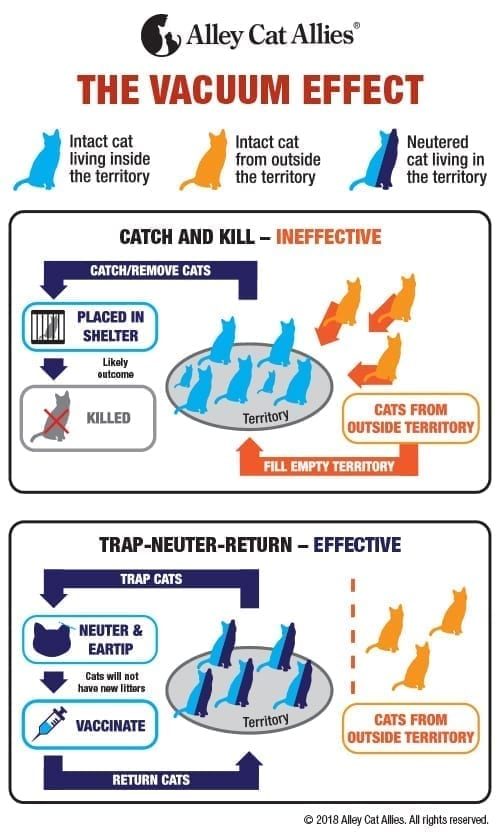
    The Vacuum Effect, graphic by Alley Cat Allies

    Our Approach Is Trap Neuter Return

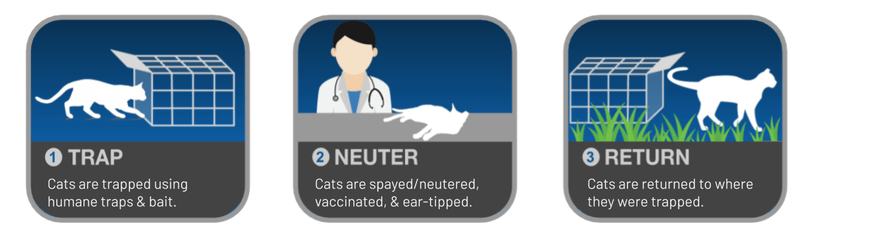
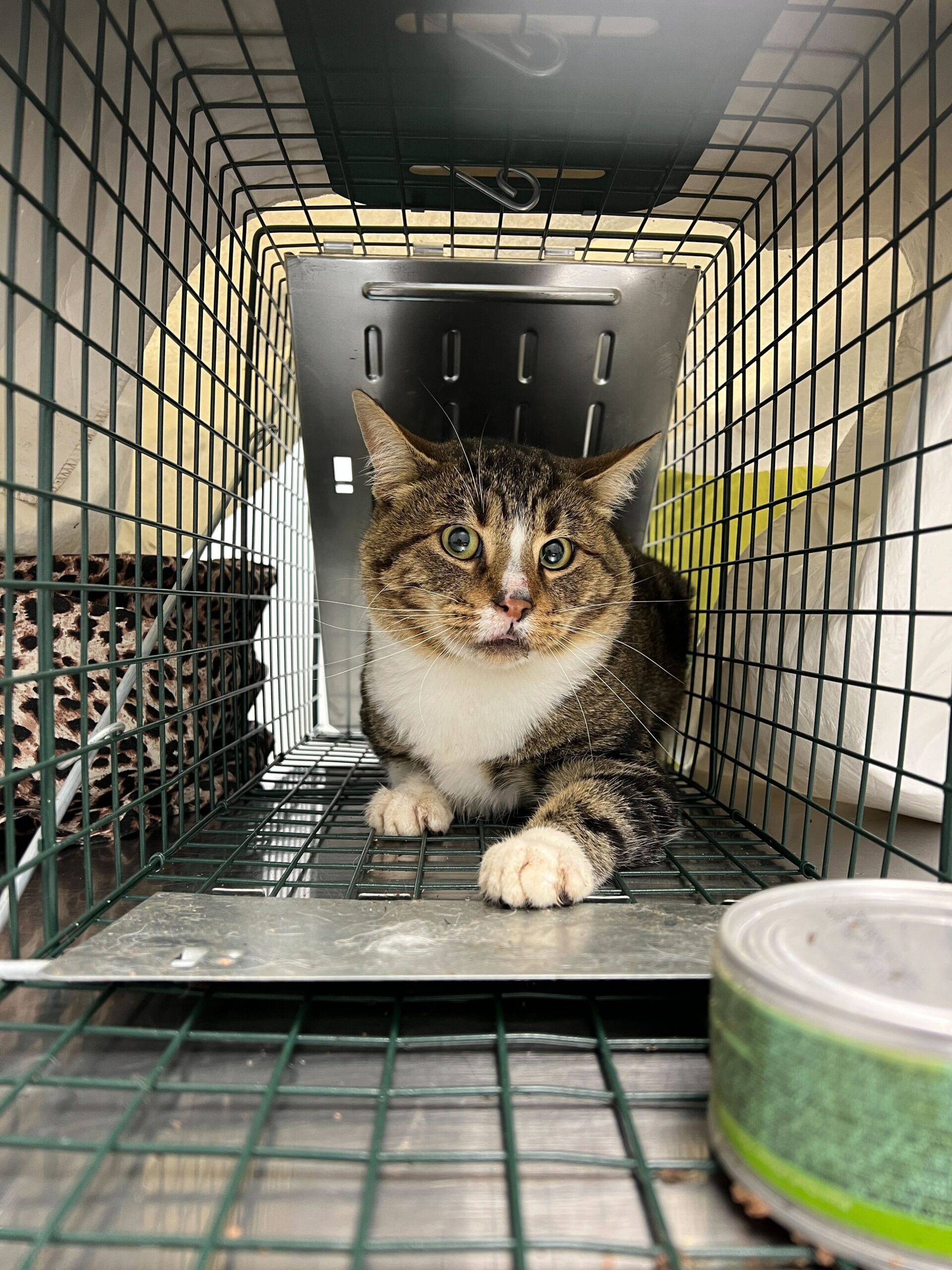
    For healthy, unsocialized community cats living in a safe location, we generally use Trap Neuter Return, commonly called TNR.

    Through TNR, cats are:

    1. Humanely trapped
    2. Spayed or neutered
    3. Provided with appropriate veterinary care
    4. Ear tipped for identification
    5. Returned to the outdoor location they know as home

    Sterilization prevents future litters and can reduce behaviours associated with mating, including spraying, fighting, roaming, and loud vocalizing.

    When TNR is performed consistently across a colony, the population can stabilize and gradually decline without repeatedly displacing cats.

    The BC SPCA describes TNR as returning free roaming cats to the outdoor locations where they were found after sterilization. Its community cat guidance also explains that TNR can prevent colonies from growing while helping cats become healthier and better neighbours.

    When Might a Cat Be Removed?

    Not every cat should automatically be returned outdoors.

    Removal may be appropriate when:

    • The cat is friendly, appears lost or abandoned, and may be suitable for adoption

    • The cat requires medical treatment that cannot be safely provided outdoors

    • The location presents an immediate and serious threat to the cat

    • The property is being demolished or permanently altered

    • The cat’s basic needs cannot be met at the location

    • A carefully planned working cat placement or other appropriate lifelong home has been confirmed

    Each situation must be evaluated individually. A friendly stray cat, an unsocialized community cat, and a lost companion cat may require very different plans.

    Removal should be based on the cat’s welfare and the circumstances of the location, not simply because someone does not want to see a cat outside.

    Relocation Is Not an Emergency Shortcut

    Suitable working cat homes are limited. They must have committed caregivers, daily food and water, appropriate shelter, veterinary care when needed, and a secure confinement space for the transition period.

    A rescue cannot responsibly trap a cat first and figure out the plan afterward.

    Please do not trap a cat unless you already know:

    • Why the cat is being trapped

    • Where the cat will be safely held

    • Who is responsible for the cat

    • Whether a veterinary appointment has been arranged

    • Whether the cat will be returned, placed, or assessed for adoption

    • What will happen if the original plan falls through

    If you want a rescue organization involved, contact the organization and receive confirmation before setting a trap.

    Prolonged Confinement Can Affect Their Health

    Unsocialized community cats are highly connected to their familiar territory. Being confined in an unfamiliar environment, surrounded by unfamiliar sounds, smells, people, and animals, can cause significant and ongoing stress.

    That stress is not only emotional. Prolonged stress can affect appetite, interfere with recovery, contribute to stress related illness, and place additional strain on the body’s immune response. The Feline Veterinary Medical Association recognizes that some outdoor cats cannot have their welfare needs adequately met through indoor confinement.

    Short term confinement is necessary for safe veterinary care and recovery. However, once a community cat has been assessed, treated, sterilized, and is medically cleared for release, unnecessarily extending that confinement may cause more harm than benefit.

    Returning the cat safely and promptly to their familiar territory, as soon as it is medically appropriate, is generally the healthiest and least stressful outcome.
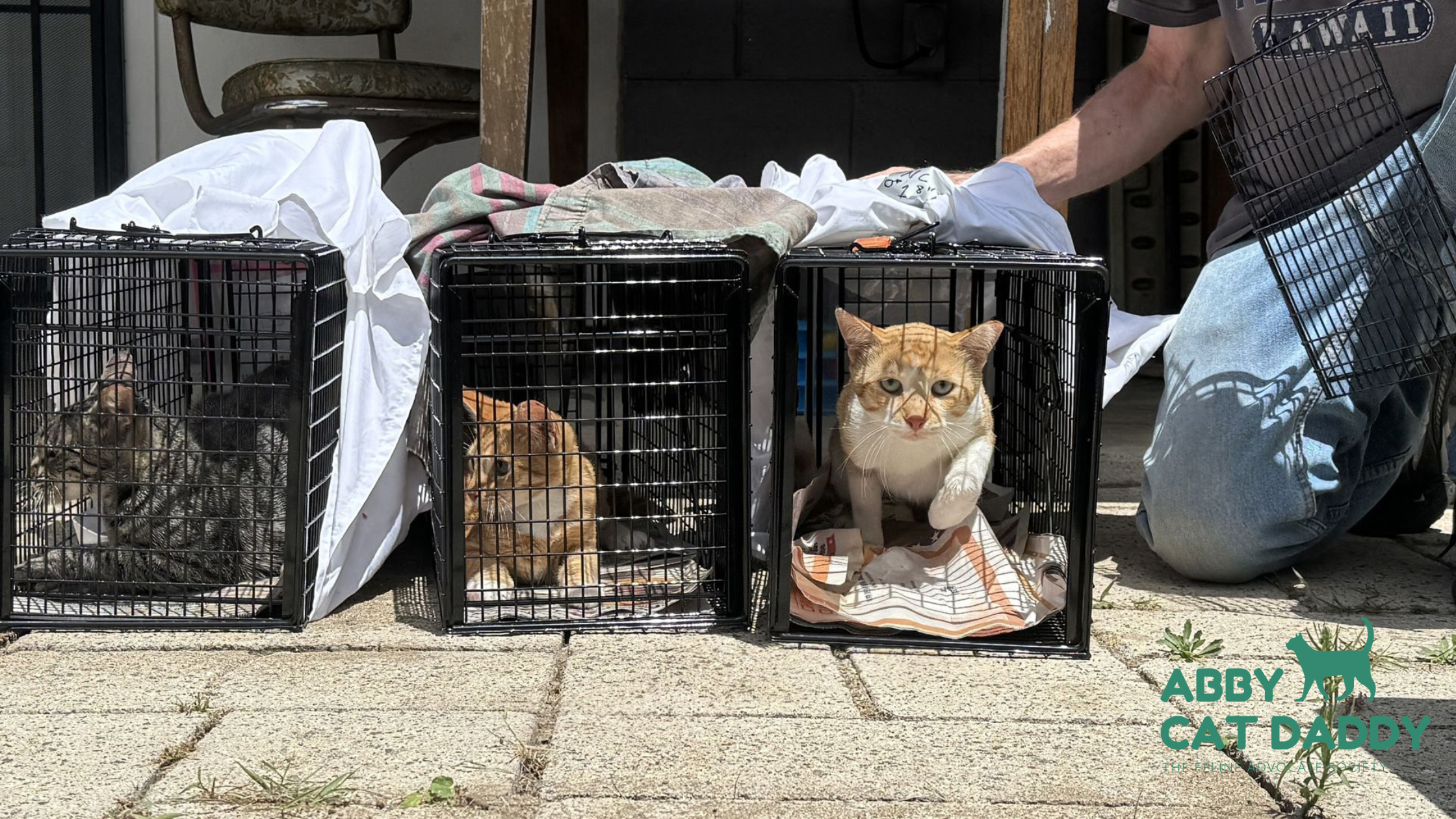
    Cats being released back to their site post sterilization.
    Photo from Neighborhood Cats

    Sanctuary Space Is a Limited Resource

    Feral cat sanctuaries and other specialized safe placements can provide an important option for cats who cannot safely return to their original location. However, these spaces have limited capacity and cannot serve as a general destination for every community cat someone would prefer removed.

    We believe sanctuary placements are best prioritized for cats with exceptional welfare needs. This may include cats living with injuries, disabilities, chronic medical conditions, or other circumstances requiring ongoing care that cannot reasonably be provided in their current outdoor environment.

    A healthy community cat should not lose their established home simply because their presence is considered inconvenient or because someone has labelled them a “pest.” When a cat can safely remain in their territory, TNR and responsible colony management are generally more appropriate than using a limited sanctuary placement.

    This approach helps preserve specialized spaces for cats who genuinely need the additional protection and care they provide. Placement decisions must always be based on the individual cat’s welfare, the safety of the original location, and the suitability and availability of any proposed alternative.
    Community Cooperation Creates Lasting Change

    Successfully managing community cats requires more than moving individual animals. It requires sterilization, responsible feeding, clean feeding stations, suitable shelter, monitoring for new cats, and cooperation between property owners, caregivers, rescue organizations, veterinary professionals, and local governments.

    Our role is to help create humane, sustainable solutions for cats in the Fraser Valley. Sometimes that means bringing a friendly or vulnerable cat into care. Sometimes it means arranging veterinary treatment. Often, it means returning a sterilized community cat to the only home they have ever known.

    We understand that living near community cats can create concerns. We are willing to discuss those concerns and look for practical solutions. However, taking every outdoor cat away is neither a responsible nor sustainable answer.

    This is why we are not a cat removal service, and why we are an Advocate Society- we advocate against harmful practices.

    Additional Resources

    BC SPCA Position Statement on Cat Welfare
    BC SPCA Guidance for Stray and Feral Cats

    Alley Cat Allies: Relocation as a Last Resort

  • Spay/Neuter and TNR: A Critical Investment in Community Well-Being and Municipal Fiscal Health

    Spay/Neuter and TNR: A Critical Investment in Community Well-Being and Municipal Fiscal Health

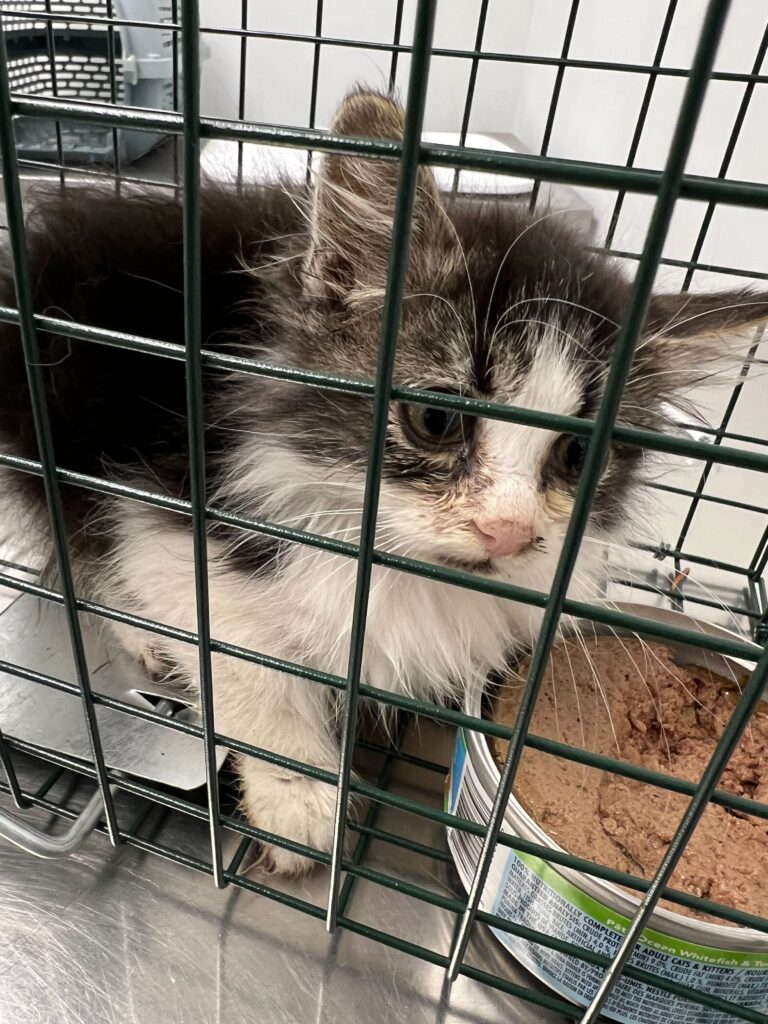
    A kitten we recently pulled from a TNR site in the trap still before being reuinited with his brother.

    Across the Fraser Valley and throughout Canada, community cat overpopulation is not a “cat problem”—it is a municipal infrastructure problem, a public health problem, and a budgetary problem. As someone who works hands-on with the consequences every day, I see the same pattern in city after city: when local governments fail to invest in accessible spay/neuter and Trap-Neuter-Return (TNR), companion animals, residents, and taxpayers all pay the cost.

    But when municipalities partner with grassroots organizations—especially charities like ours that already do the work with minimal overhead—communities see measurable, long-term returns on that investment. This is not speculation. It is evidence-based, cost-effective public policy.


    Why Spay/Neuter Is Essential: Health, Welfare & Population Stability

    For non-human animals, spaying or neutering is one of the single most impactful interventions we can provide. The benefits are well-documented:

    • Reduced risk of disease, including pyometra, testicular cancer, mammary cancer, and infections.
    • Decreased behaviours that lead to injury, roaming, and car-strike risk.
    • Improved overall welfare, especially for free-roaming and community cats who reproduce rapidly under stressful and resource-scarce conditions.

    Unsterilized cats can reproduce at exponential rates—one intact female can produce over 100 kittens in her reproductive lifetime, and her offspring compound the cycle. Without intervention, this creates a pipeline of kittens entering shelters, rescues, municipal intake systems, and public spaces. This is preventable.


    TNR: The Only Evidence-Based Method for Population Reduction

    TNR—Trap, Neuter/Spay, Return—is proven to stabilize and reduce colony populations over time. When adult cats are sterilized and returned:

    • They no longer reproduce.
    • They maintain territory, preventing unsterilized cats from moving in (the “vacuum effect”).
    • Colony size declines naturally through attrition.

    Jurisdictions across North America—from Los Angeles to Jacksonville to Toronto—have found that TNR reduces shelter intake, decreases euthanasia rates, and dramatically lowers municipal animal control costs. Doing nothing costs far more in the long run.


    The Fiscal Case: Spaying/Neutering Saves Municipalities Money

    Municipalities often don’t track the true annual cost of unmanaged cat populations, but evidence from other regions paints a clear picture: proactive spay/neuter programs are significantly cheaper than reacting to continual overpopulation.

    Key findings from comparative municipal studies include:

    1. Shelter Intake & Euthanasia Costs Drop Dramatically

    Cities that subsidize S/N and fund TNR consistently report:

    • 30–90% reductions in intake
    • 40–95% reductions in euthanasia
    • Lower staffing and operational costs

    Fewer animals entering the municipal system = fewer taxpayer dollars spent.

    2. Animal Control Operations Become More Efficient

    Without TNR, municipalities spend endless cycles:

    • Responding to nuisance calls
    • Picking up litters
    • Removing, transporting, housing, and often euthanizing cats

    TNR breaks the cycle and reduces complaints long-term.

    3. Public Health Costs Decline

    Spay/neuter reduces:

    • Feline fights and bite incidents
    • Roaming behaviours
    • Environmental impacts (waste, noise, predation)
    • Disease transmission within colonies

    Healthier, fixed cat populations produce fewer bylaw enforcement calls and fewer public health interventions.

    4. Municipal Support Leverages Massive Volunteer Labour

    Every dollar municipalities invest is multiplied by nonprofits and volunteers who do the trapping, transporting, housing, education, and aftercare work.

    This is the most cost-efficient public-private partnership a city can adopt.

    https://youtube.com/shorts/3f6hH1Ls9m8?feature=share
    Abby Cat Daddy Volunteers releasing three recently TNR’d girls back to their home.

    A Local Government Responsibility—Not a Luxury

    Organizations like Abby Cat Daddy absorb enormous costs that should not fall solely on charities:

    • Spay/Neuter surgeries
    • Emergency veterinary care
    • Fostering and socializing kittens born in unmanaged colonies
    • Feeding community cats
    • Colony cleanup
    • Medications, vaccines, microchipping
    • Volunteer coordination, education, and public support
    • Intake management from residents who have nowhere else to turn

    Municipalities benefit directly from all of this work—yet most contribute nothing financially.

    This is not sustainable.

    Local governments regularly budget for:

    • Waste removal
    • Traffic management
    • Parks and recreation
    • Rodent control
    • Stormwater systems

    Animal population management deserves the same recognition because it produces the same essential outcome: community stability and public safety.


    What Municipalities Should Do

    ✅ Fund targeted spay/neuter for low-income residents

    Allowing cost to be a barrier guarantees continual population growth.

    ✅ Allocate annual funding to nonprofits performing TNR

    Even $25,000–$50,000 per year can fix hundreds of cats and prevent thousands of births.

    ✅ Build municipal–nonprofit partnerships

    Nonprofits already have the infrastructure, training, and community trust. Cities simply need to resource them.

    ✅ Track data and measure impact

    Shelter intake, complaint calls, and bylaw utilization all decrease after investing in S/N.


    The Bottom Line

    Spay/neuter and TNR are not “animal issues”—they are public systems issues with clear operational and financial outcomes. Local governments can continue paying for the symptoms of overpopulation year after year, or they can invest in the solution.

    Organizations like ours are already doing the work. We are already reducing municipal burdens. We are already saving taxpayer dollars.

    But we cannot hold the line alone.

    It’s time for municipalities to invest in community-level spay/neuter and TNR as essential public infrastructure. The returns—ethical, environmental, and fiscal—are undeniable.


    References

    Peer-Reviewed & Government Data

    Municipal Reports Demonstrating Cost Savings


  • The Sad Truth About Kitten Season: Why Awareness Matters

    The Sad Truth About Kitten Season: Why Awareness Matters

    Kitten season, typically spanning from early spring through late fall, is often perceived as a delightful time when cute, cuddly kittens fill shelters and pet stores, eagerly awaiting adoption. However, this influx is not just an adorable phenomenon; it represents a serious and recurring issue in animal welfare. The sad truth about kitten season is its direct connection to pet overpopulation, the strain on shelters, and the dire consequences for countless animals. Let’s dive deeper into why this season is more bitter than sweet and how increased awareness and action can make a difference.

    The Onset of Kitten Season

    Kitten season aligns with the breeding cycles of cats, peaking when the weather becomes warmer. This results in a surge of births because many cats are not spayed or neutered. Consequently, shelters during this time are overwhelmed with litters of kittens. While kittens are indeed adoptable, the sheer volume of new arrivals during these months often exceeds the number of available homes.

    The Strain on Resources

    Animal shelters and rescue organizations face significant challenges during kitten season. The sudden increase in population stretches resources thin, from space and food to veterinary care and manpower. Many shelters operate on limited budgets, and the influx of kittens can lead to compromised care for all animals if additional support is not provided.

    Financial Impact

    The cost of healthcare, including vaccinations, spaying, and neutering, can be substantial. Shelters strive to ensure that kittens are not only rehomed but are also healthy and sterilized to prevent future overpopulation. This ideal scenario is often financially draining.

    Emotional Toll

    The emotional toll on shelter staff and volunteers can be profound. Volunteers face difficult decisions daily, including the euthanization of healthy animals when adoption rates do not keep up with the intake of new kittens. The stress and moral strain of managing this cycle can lead to burnout and high turnover among dedicated volunteers.

    The Darker Side: Euthanasia and Maternal Deaths

    Perhaps the saddest aspects of kitten season are the increased rate of euthanasia and the tragic fate of some pregnant cats. Shelters, despite their best efforts, are sometimes forced to make heart-wrenching decisions when capacity is exceeded. Healthy kittens and adult cats alike may face euthanasia simply because there is no room to house them and insufficient interest in adoption. (Most organizations in BC do not euthanize for this reason, but will turn away cats due to overflowing)

    Tragically, some pregnant cats die in labor due to complications such as kittens becoming stuck during delivery. In some heart-rending cases, entire litters are found alongside the bodies of their deceased mothers, highlighting the severe risks of unchecked breeding and the harsh realities of life for stray and feral cats.

    What Can We Do?

    The challenges of kitten season, while daunting, are not insurmountable. There are several ways we can help mitigate this issue:

    Spay and Neuter

    The most effective way to prevent unwanted litters is by spaying and neutering pets. Pet owners must be encouraged to sterilize their cats, and communities should support low-cost or free spay/neuter programs to reach a broader audience.

    Foster and Adopt

    Fostering helps alleviate the burden on shelters by providing temporary homes, and adopting from shelters makes room for other animals in need. Both actions directly contribute to reducing the number of animals in shelters.

    Educate and Advocate

    Increasing awareness about the challenges of kitten season can lead to community action and support. Advocating for responsible pet ownership and supporting local shelters through donations or volunteering are vital steps in making a difference.

    Support Trap-Neuter-Return (TNR)

    For feral or community cats, TNR programs are effective in controlling the population humanely. These programs involve trapping the cats, neutering them, and then returning them to their environment. This is why it’s vital that we get our program up and running again.

    Conclusion

    Kitten season, for all its apparent cuteness, underscores a critical issue in animal welfare. By understanding the sad truths behind this season and taking proactive steps to address them, we can hope to see a future where every kitten born has a chance at a long, healthy, and happy life. As a community, fostering compassion and taking action can transform the plight of these innocent animals into a cause for hope and positive change.