
Author: Founder

  • Why We Don’t Have “Rescue” in Our Name

    Why We Don’t Have “Rescue” in Our Name

    When people first discover Abby Cat Daddy the Feline Advocate Society, one of the most common questions we hear is:

    “Why isn’t there ‘rescue’ in your name?”

    It’s a fair question.

    After all, we operate a foster-based cat rescue program. We take in homeless kittens and cats, provide medical care, find foster homes, and help them transition into loving forever homes through adoption.

    But rescue is only one part of what we do.

    In fact, if we only focused on cat rescue and adoption, we would never solve the larger issues facing cats in our communities.

    That is why we chose to become a feline advocacy organization rather than simply identifying ourselves as a rescue group.

    Our mission is to improve the lives of local cats throughout the Fraser Valley by addressing the causes of feline overpopulation, supporting responsible cat ownership, assisting community cat caretakers, and helping families keep their companion animals in their homes whenever possible.

    We believe the best way to help cats is not only by rescuing them after a crisis occurs, but by preventing that crisis from happening in the first place.

    Cat Rescue Is Important, But Prevention Matters Too

    Every year, cat rescues across British Columbia are overwhelmed with requests for help.

    Stray cats continue to reproduce.

    Unsterilized cats have unwanted litters.

    Families face financial barriers to veterinary care.

    Lost cats enter shelters because they cannot be identified.

    Community cats continue to struggle without access to basic medical support.

    The result is thousands of cats entering rescues, shelters, and foster homes every year.

    While adoption is an essential part of the solution, it is only one piece of a much larger puzzle.

    If we truly want to reduce the number of homeless cats, we must focus on prevention, education, and advocacy alongside rescue efforts.

    Our Trap Neuter Return (TNR) Program

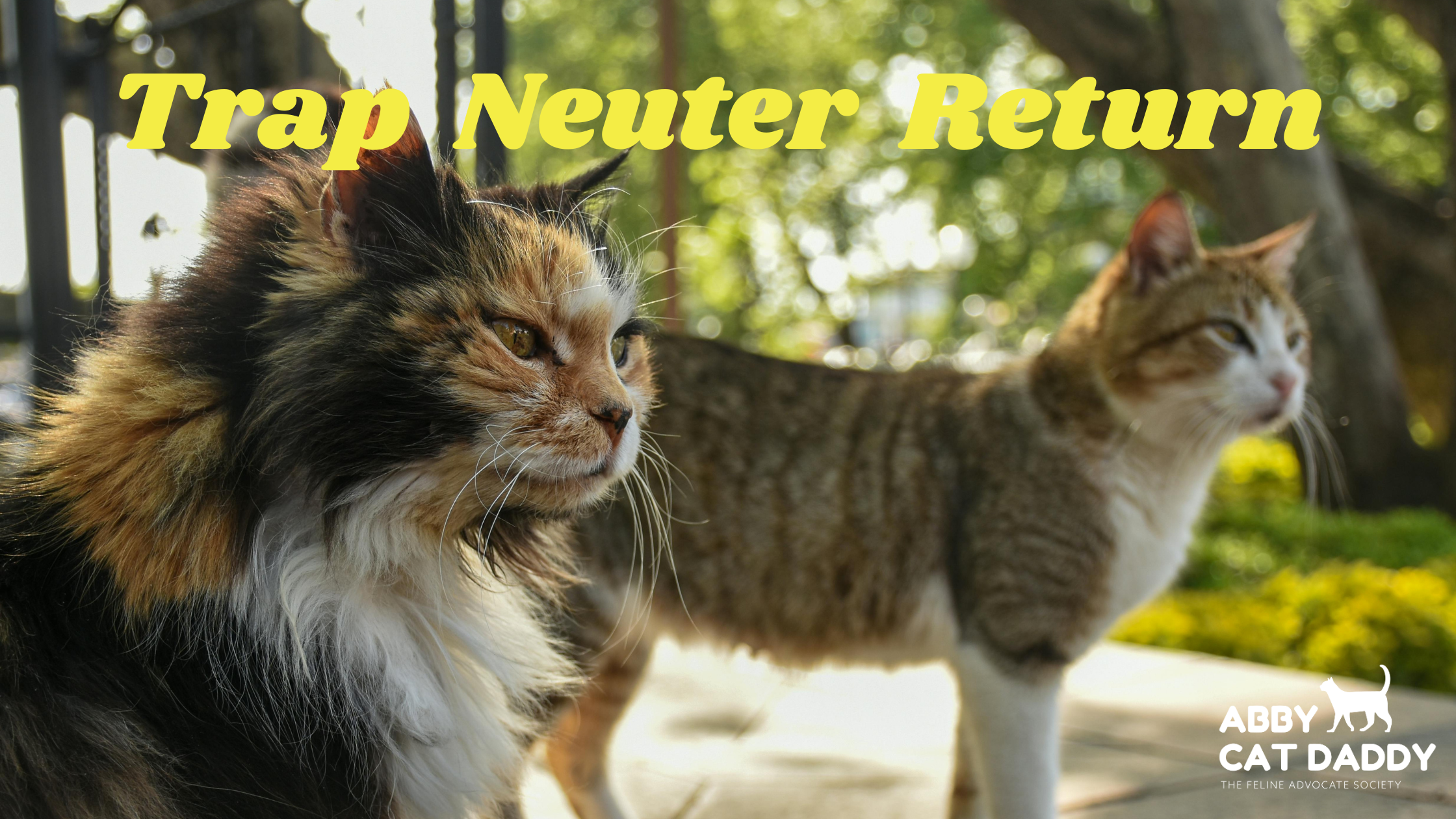
    One of the most impactful programs we operate is Trap Neuter Return, commonly known as TNR.

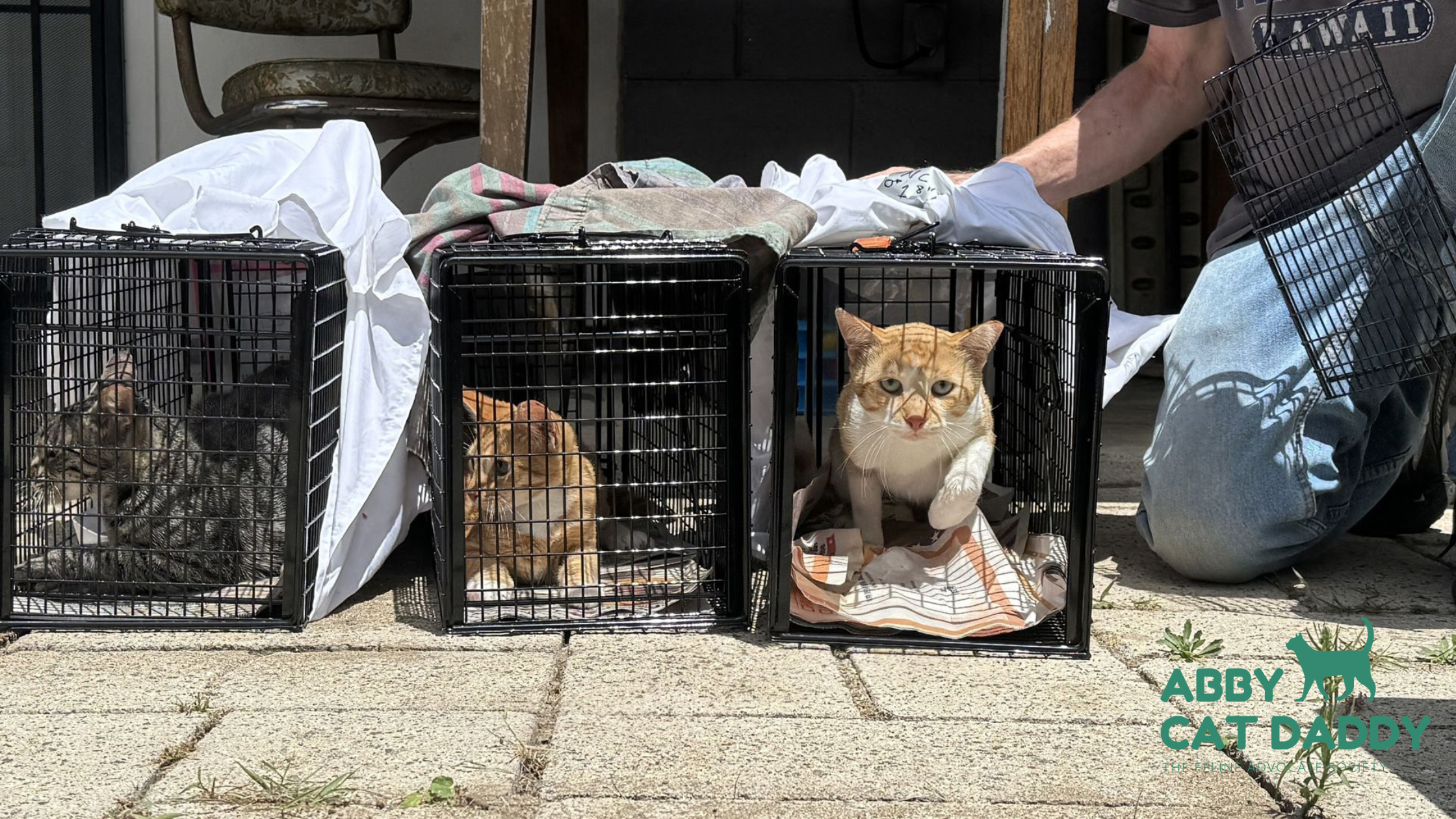
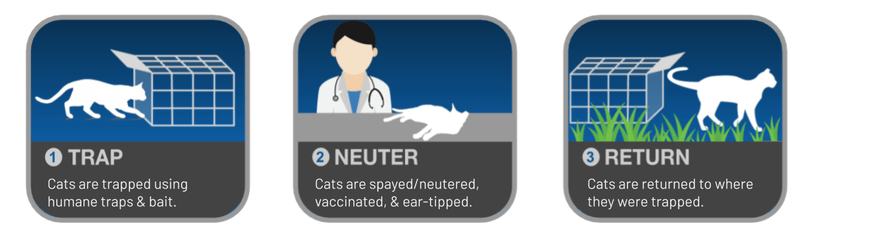
    TNR is a humane and effective approach to managing community cat populations. Cats are humanely trapped, spayed or neutered, vaccinated when possible, and returned to their outdoor homes.

    This prevents future litters while allowing healthy community cats to continue living in the environment they know.

    Without TNR, a single unsterilized female cat and her offspring can contribute to hundreds of kittens being born over just a few years.

    By supporting TNR efforts throughout Abbotsford, Mission, Chilliwack, and surrounding communities, we are helping reduce the number of stray kittens entering shelters and rescues in the future.

    TNR is not just about helping individual cats. It is about creating lasting change for entire communities.

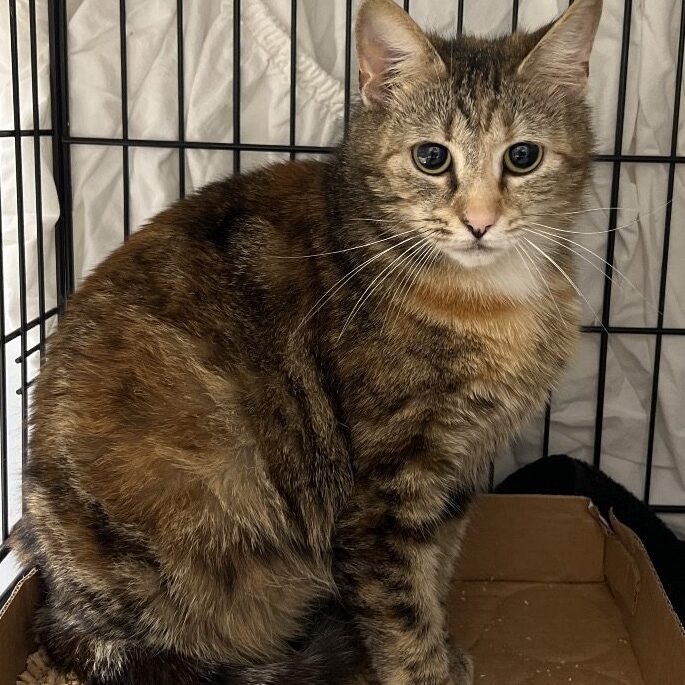
    Berenice, a cat that was trapped at a TNR site, who was given the option to become an indoor cat but she politely told us “no way” before going back to her home.

    Making Spay and Neuter More Accessible

    Many people want to do the right thing for their cats but simply cannot afford the cost of veterinary care.

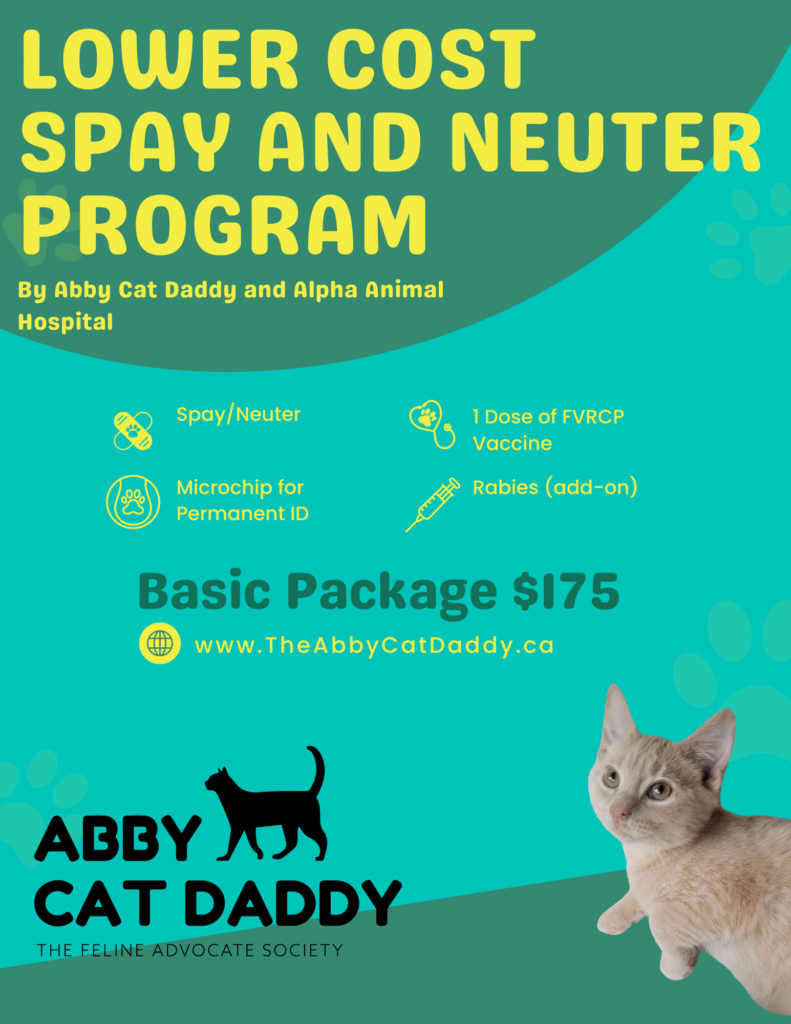
    That is why we operate our Lower Cost Spay and Neuter Program.

    By helping bridge the financial gap, we make it easier for families to access essential preventative care for their cats.

    Spaying and neutering reduces unwanted litters, improves health outcomes, and decreases the number of cats that ultimately end up in rescues, shelters, or living as stray cats.

    Helping one family sterilize their cat today can prevent dozens of future cats from needing rescue tomorrow.

    Helping Lost Cats Find Their Way Home

    Every year, countless cats enter shelters and rescue organizations because they cannot be identified.

    Many of these cats already have families searching for them.

    That is why we host microchip clinics and promote permanent identification whenever possible.

    A microchip provides a lifelong form of identification that cannot be lost, removed, or damaged like a collar.

    Increasing the number of microchipped cats in our community means more lost cats are reunited with their families and fewer cats spend weeks or months in rescue care waiting to be claimed.

    Supporting Families Through Our Feline Food Bank

    Sometimes the biggest threat facing a cat is not homelessness.

    Sometimes it is financial hardship.

    Rising costs continue to impact families throughout the Fraser Valley. More and more people are reaching out for help because they are struggling to afford food for their cats.

    Our Feline Food Bank exists to provide temporary support during difficult times.

    By helping families access cat food when they need it most, we can often prevent cats from being surrendered to shelters or rescues.

    The goal is simple: keep cats with the people who love them.

    When we support families, we support cats.

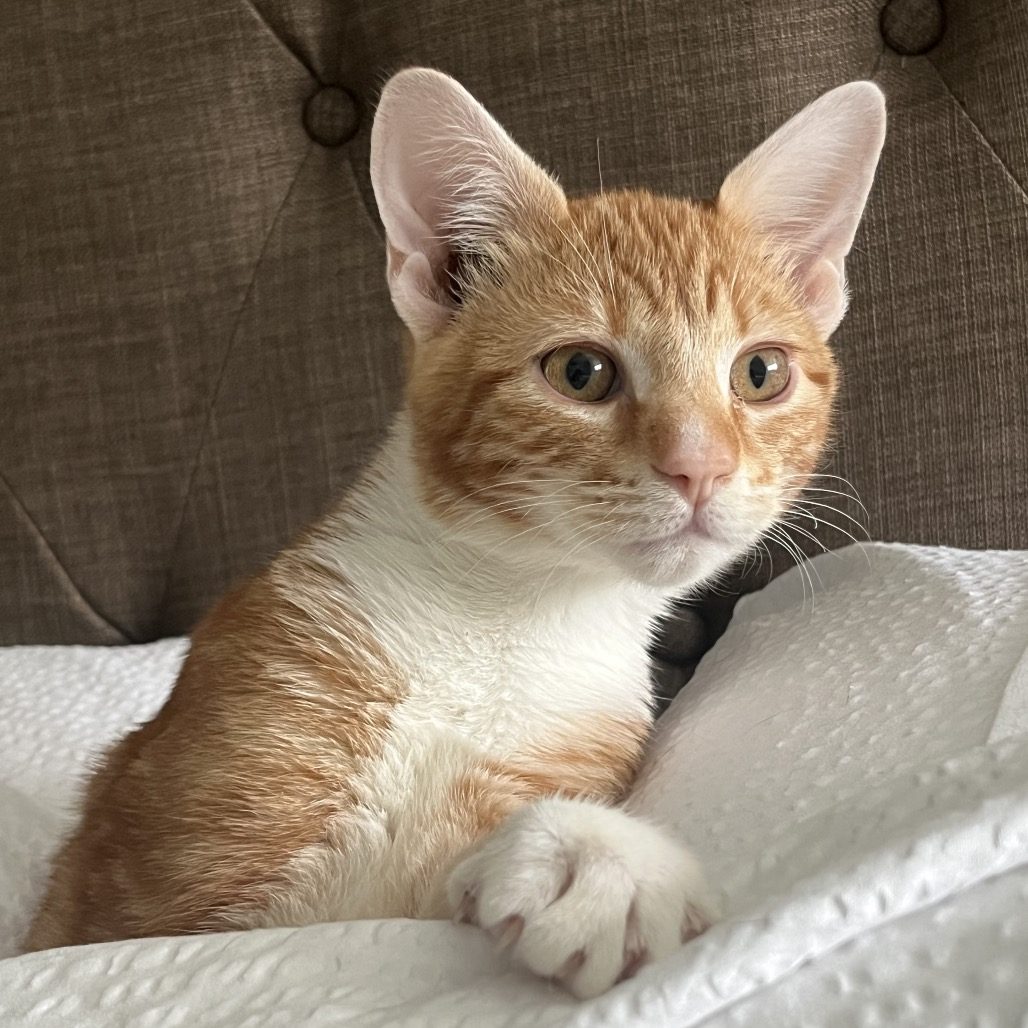
    Seth, a kitten pulled from a TNR site and adopted out after being neutered and fostered.

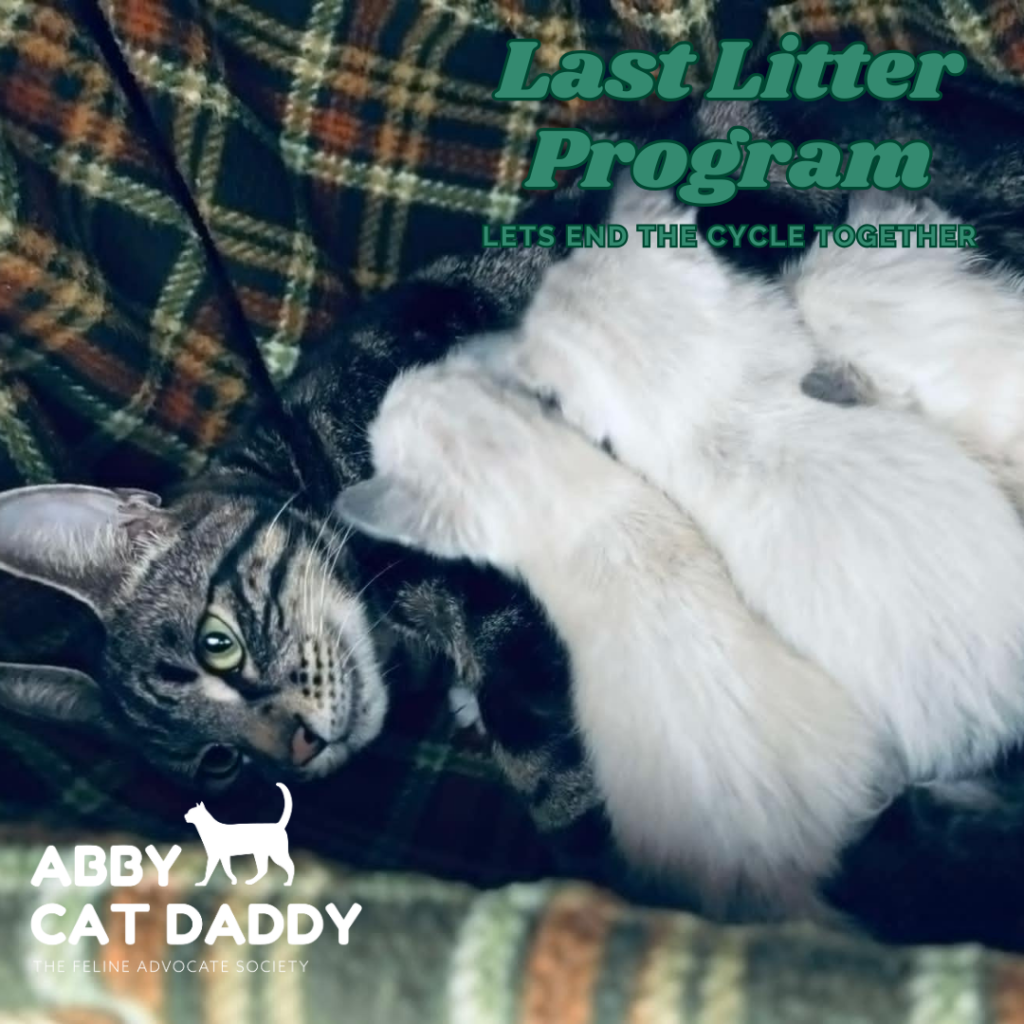
    Helping With Unexpected Litters Through Our Last Litter Program

    Accidents happen.

    Even responsible cat owners can find themselves facing an unexpected litter after a cat slips outdoors or escapes.

    Rather than judging families, we focus on solutions.

    Our Last Litter Program helps families navigate these situations by providing support, resources, and a pathway toward preventing future litters.

    The kittens receive care and are placed into loving homes through adoption, while the parent cats are sterilized to ensure the cycle does not continue.

    Programs like these help address the root causes of cat overpopulation while supporting both cats and their caregivers.

    Helping Stray Cats and Community Cats

    Not every cat has an owner.

    Throughout the Fraser Valley, there are countless stray cats and community cats living outdoors.

    Some are friendly and have simply become lost.

    Others have been abandoned.

    Many were born outside and have never lived in a home.

    We regularly assist with reports of stray cats, provide guidance on community cat concerns, help connect people with resources, and advocate for humane solutions.

    Whether a cat needs medical attention, TNR services, foster placement, or simply a caretaker who understands their needs, we work to find the most appropriate path forward.

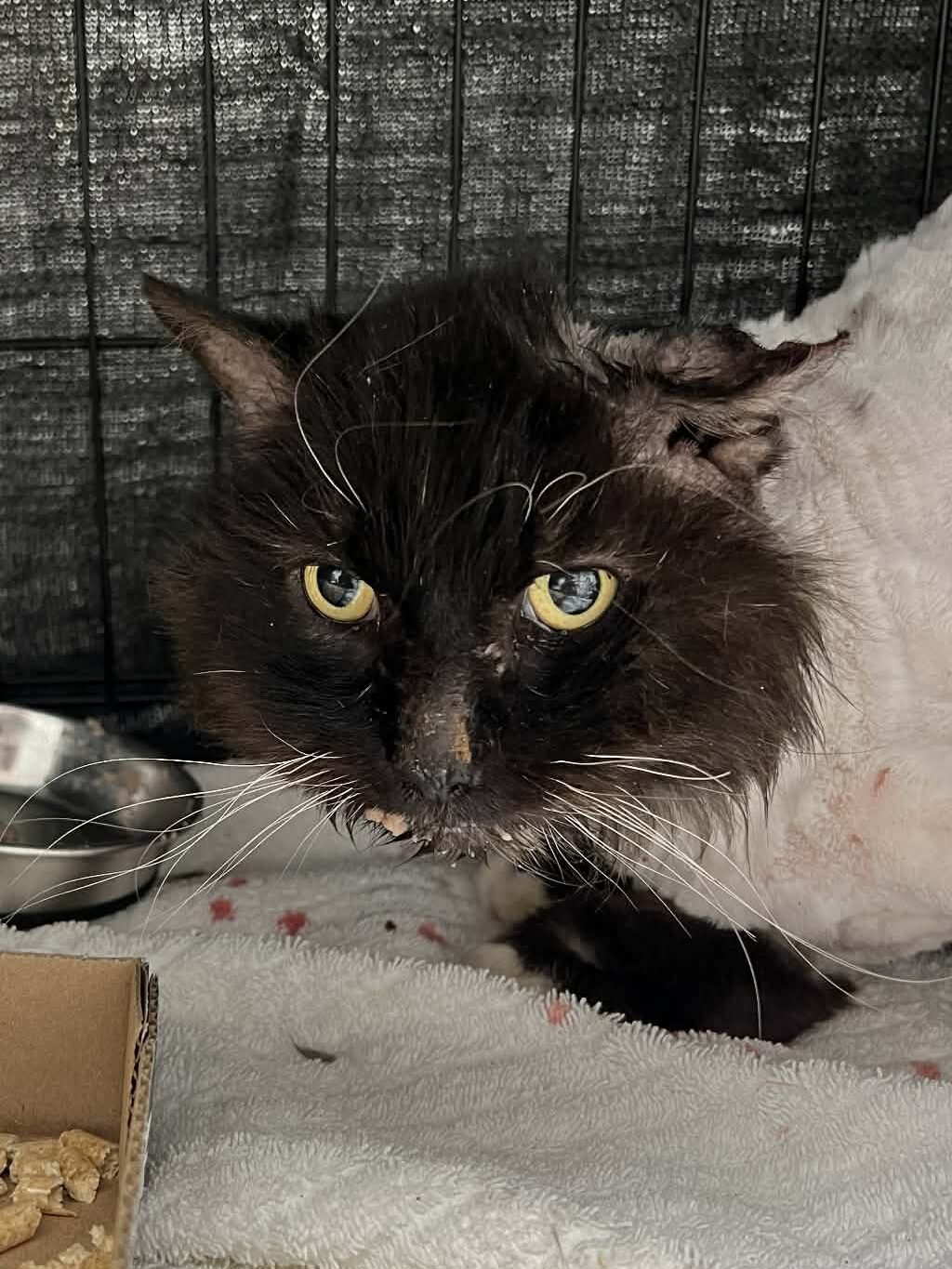
    Oreccchiette who was a community cat in Abbotsford who had neighbours feeding and watching over him who reached out once they realized he had some injuries. We got him fixed up, neutered and a new fur cut and sent him back out once he was ready.

    More Than Our Own Programs

    One thing that makes our organization unique is that we do not believe every solution has to come from us.

    Our goal is not to be the answer to every problem.

    Our goal is to help people find the right answer.

    That is why our website includes resources for reporting missing cats, reporting found cats, locating assistance programs, and accessing information from other organizations that may be able to help.

    If another program is better suited to a particular situation, we will happily recommend it.

    Because helping cats is more important than receiving credit.

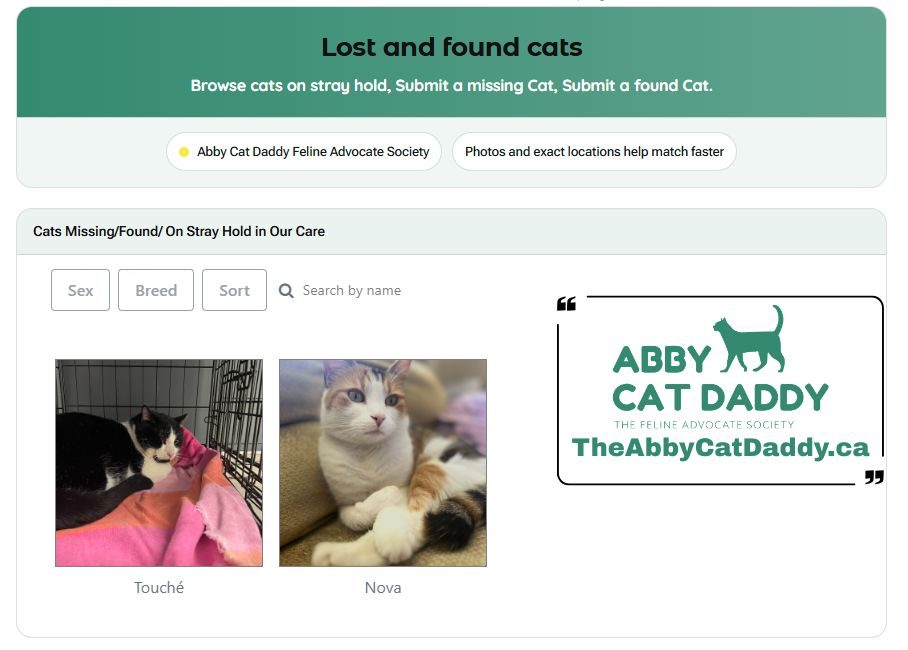
    A snapshot of our website where members of the community can report missing cats, look to see which strays we have in our system and see if their cat had been sited.

    Creating a Better Future for Cats

    Yes, we are a cat rescue.

    We rescue abandoned kittens.

    We help homeless cats.

    We provide foster care, medical treatment, rehabilitation, and adoption services.

    But we are also much more than that.

    We are advocates for community cats.

    We are supporters of Trap Neuter Return.

    We help families access spay and neuter services.

    We operate a feline food bank.

    We promote microchipping and responsible cat ownership.

    We help with stray cat concerns.

    We educate, advocate, and work toward long term solutions.

    Because while rescuing cats is important, building a future where fewer cats need rescuing is even more important.

    That is why we are Abby Cat Daddy the Feline Advocate Society.

    Not simply because we rescue cats.

    But because we advocate for them every step of the way.

  • Adopted a Kitten From an Online Marketplace and Not Sure What Comes Next?

    Adopted a Kitten From an Online Marketplace and Not Sure What Comes Next?

    Adorable piebald kitten with black and white fur resting on gravel surface outdoors.

    Online marketplaces have become a common place for people to find kittens. Sometimes these situations are well intentioned. Other times they are rushed, unplanned, or missing critical care steps. If you have recently adopted a kitten or two and they are still intact or you are unsure about their vetting history, you are not alone. What matters most is what you do next.

    This guide walks you through the right questions to ask, the steps to take right away, and how Abby Cat Daddy can help support both you and the cats involved.


    First Things First. Ask the Right Questions

    If you are still in contact with the person you adopted from, gathering information can make a big difference for your kitten’s health and for preventing future litters.

    Here are some important questions to ask:

    • How old are the kittens exactly
    • Have they seen a veterinarian at any point
    • Have they received any vaccines and if so which ones and when
    • Have they been dewormed
    • Are they eating solid food and what diet have they been on
    • Was the mom cat seen by a vet during pregnancy or after giving birth

    If answers are vague or unknown, that is okay. It simply means you should move forward assuming no prior veterinary care has been done and start fresh.


    What Is the Plan for Mom?

    One of the most important and often overlooked questions is what will happen to the mother cat.

    If mom is still intact and not spayed, she can become pregnant again very quickly, sometimes within weeks of giving birth. This is how repeated accidental litters happen and how caregivers become overwhelmed.

    Ask directly:
    • Is mom still with the original caregiver
    • Is there a plan to have her spayed
    • Is she friendly or fearful
    • Is she an owned cat or a community cat

    If there is no plan in place, this is where intervention matters. Helping the mom cat is just as important as helping the kittens.

    Our Last Litter Program exists specifically for these situations. It supports caregivers in ensuring that the current litter is the last one by providing help with spaying mom and guidance for kittens once they are old enough. Preventing future litters protects mom’s health and reduces the number of kittens entering already crowded shelters and rescues.


    Your Immediate Next Step. Book a Vet Visit

    Even if the kittens look healthy, your first step should always be to see a veterinarian.

    A baseline exam allows you to:
    • Confirm age and sex
    • Check for parasites and illness
    • Establish a vaccination plan
    • Discuss spay and neuter timing
    • Get accurate weights and health notes on record

    This visit sets your kitten up for long term health and helps catch issues early when they are easier and less costly to treat.

    If you adopted two kittens, bring both. Littermates often share parasites or infections even if only one shows symptoms.


    Spay and Neuter Is Not Optional. It Is Essential

    Spaying and neutering is one of the most impactful things you can do for your kitten’s health and for the community.

    It helps prevent:
    • Unplanned litters
    • Certain cancers and infections
    • Roaming and mating related behaviors
    • Strain on rescues and shelters

    Abby Cat Daddy offers a Spay and Neuter Program designed to remove barriers for caregivers who want to do the right thing.

    Our program includes:
    • The spay or neuter surgery
    • Take home pain medication
    • One dose of FVRCP core vaccine
    • A registered microchip

    This means your kitten leaves surgery safer, protected, and permanently identifiable if they are ever lost.

    You can learn more about eligibility and how to apply on our website under Spay/Neuter


    Don’t Forget Identification and Records

    Many kittens from online marketplaces are never microchipped or properly documented. A microchip is a simple step that can reunite lost cats with their families and prevent them from entering the shelter system.

    Keep all vet records together and update them as your kitten grows. These records matter if your cat ever needs emergency care, moves homes, or is lost.


    If You Can Help Stop the Cycle, Please Do

    If you know where your kitten came from and there are still intact cats involved, helping connect that caregiver with resources can prevent future suffering.

    Our Last Litter Program and Spay and Neuter Program are here to support people, not judge them. Accidental litters happen. What matters is choosing a different outcome going forward.


    We Are Here to Help

    If you adopted a kitten or two and are unsure what to do next, you do not have to figure it out alone.

    Visit our Our Programs page to learn more about:
    • Spay and Neuter support
    • The Last Litter Program
    • Community resources and education

    Responsible choices today change lives tomorrow. Thank you for being part of the solution and for caring enough to learn what comes next.

  • LAPS Continuation

    Founder and President of Abby Cat Daddy the Feline Advocate Society, Logan Bryan; has the following comments on the renewel of shelter lease between LAPS (Langley Animal Protection Society) and the Township of Langley:

    I welcome today’s update regarding the finalized agreement between the Township of Langley and LAPS.

    This outcome sees LAPS continuing its core mission of caring for and serving the animals of Langley while the Township assumes responsibility for animal protection and animal bylaw enforcement. In my view this is how it should be. Clear separation of enforcement and animal care roles is essential for transparency accountability and the wellbeing of both animals and the people who care for them.

    That said I do look forward to learning more about what specific programs LAPS will be continuing under this new framework how they will be funded and what restrictions if any will be attached. Experience across the rescue and animal welfare sector shows that the more roadblocks and limitations placed on programs the less effective and meaningful they ultimately become.

    While our work is based further east in the Fraser Valley serving Mission Abbotsford and Chilliwack we face many of the same ongoing challenges. Community cat populations do not recognize municipal boundaries and the impacts of policy decisions ripple across the region. We share a collective responsibility to advocate for humane evidence based solutions that support local community cats and the organizations working on the ground.

    I want to congratulate our friends on the LAPS team along with their board for reaching an agreement they can stand behind with the Township. I sincerely hope this agreement prioritizes not only spay and neuter access for cats living with families but also meaningful well resourced solutions to address the Township’s growing community cat population.

    Finally I hope this moment encourages the Township to adopt evidence based recommendations including a six cat pet household limit to better address animal welfare concerns public health considerations and the realities facing rescues and animal services.

    This has been an ongoing issue that many of us have spoken out about publicly and directly with Township leadership. I remain cautiously optimistic and will continue to advocate for policies and programs that put animal welfare first backed by practical humane and proven solutions.

    ~Logan Bryan
    The Abby Cat Daddy

    Click here to read LAPS Statement

  • Introducing The Fur Father Fund: Breaking Down Barriers to Essential Spay/Neuter Care

    Introducing The Fur Father Fund: Breaking Down Barriers to Essential Spay/Neuter Care

    At Abby Cat Daddy – The Feline Advocate Society, we believe that every companion animal deserves access to essential veterinary care, regardless of their family’s financial situation. Today, we’re thrilled to introduce a brand-new initiative that brings this vision one step closer to reality: The Fur Father Fund, made possible through the generosity and ongoing commitment of local realtor Jeffrey Wolfgang Klassen.

    Jeffrey has stepped forward with a promise to support families who want to do the right thing for their animal companions but simply cannot afford the full $175 cost of a community spay/neuter. His contributions will directly subsidize procedures for low-income households, helping prevent accidental litters, reduce feline overpopulation, and keep more cats happy, healthy, and safe.

    This is community compassion in action — and we’re incredibly grateful for it.


    A Limited but Life-Changing Resource

    While The Fur Father Fund has the potential to help many families, it is important for our community to understand that:

    • Funds are limited and will be offered on an as-available basis.
    • Applications are not guaranteed approval, even if applicants meet the general criteria.
    • All requests must go through additional processing, including documentation to verify eligibility.

    Because this fund is designed specifically for households facing financial challenges, we will require supporting documents that may include proof of income, government assistance, or extraordinary hardship. These steps ensure that funds are directed to those who need them most — and that the program remains sustainable for as long as possible.

    We appreciate your patience and understanding as each application is reviewed by our team.


    A Community Effort — You Can Help Too

    The Fur Father Fund may have been sparked by the generosity of Jeffrey Wolfgang Klassen, but its future can be strengthened by the entire community.

    If you believe in accessible veterinary care, want to reduce overpopulation, or simply want to help a neighbour in need, you can also donate to The Fur Father Fund online. Every contribution directly lowers the cost of spay/neuter procedures for families who are struggling financially.

    Together, we can extend the reach of this program and help even more human-animal families care responsibly for their feline companions.
    (Donation link will be added below.)


    Why This Matters

    Affordable spay/neuter access:

    • Reduces unplanned litters and community overpopulation.
    • Prevents serious medical conditions and unwanted behaviours.
    • Lessens strain on rescues, shelters, and TNR programs.
    • Creates a healthier, more compassionate community for both human-animals and non-human animals.

    The Fur Father Fund allows us to bridge a gap our team sees every single day. For many households, the desire to be responsible is there — the financial means simply aren’t. Jeffrey’s generosity changes that.


    A Heartfelt Thank You

    To Jeffrey Wolfgang Klassen: thank you for stepping up in such a meaningful way. Your ongoing support is already making a real difference for families and felines across the Fraser Valley. You truly are a “Fur Father” to the cats who need it most.

    And to our community: thank you for believing in our mission. Whether you adopt, foster, donate, volunteer, or simply share our work, you are helping us build a stronger safety net for the cats who rely on all of us.

  • Spay/Neuter and TNR: A Critical Investment in Community Well-Being and Municipal Fiscal Health

    Spay/Neuter and TNR: A Critical Investment in Community Well-Being and Municipal Fiscal Health

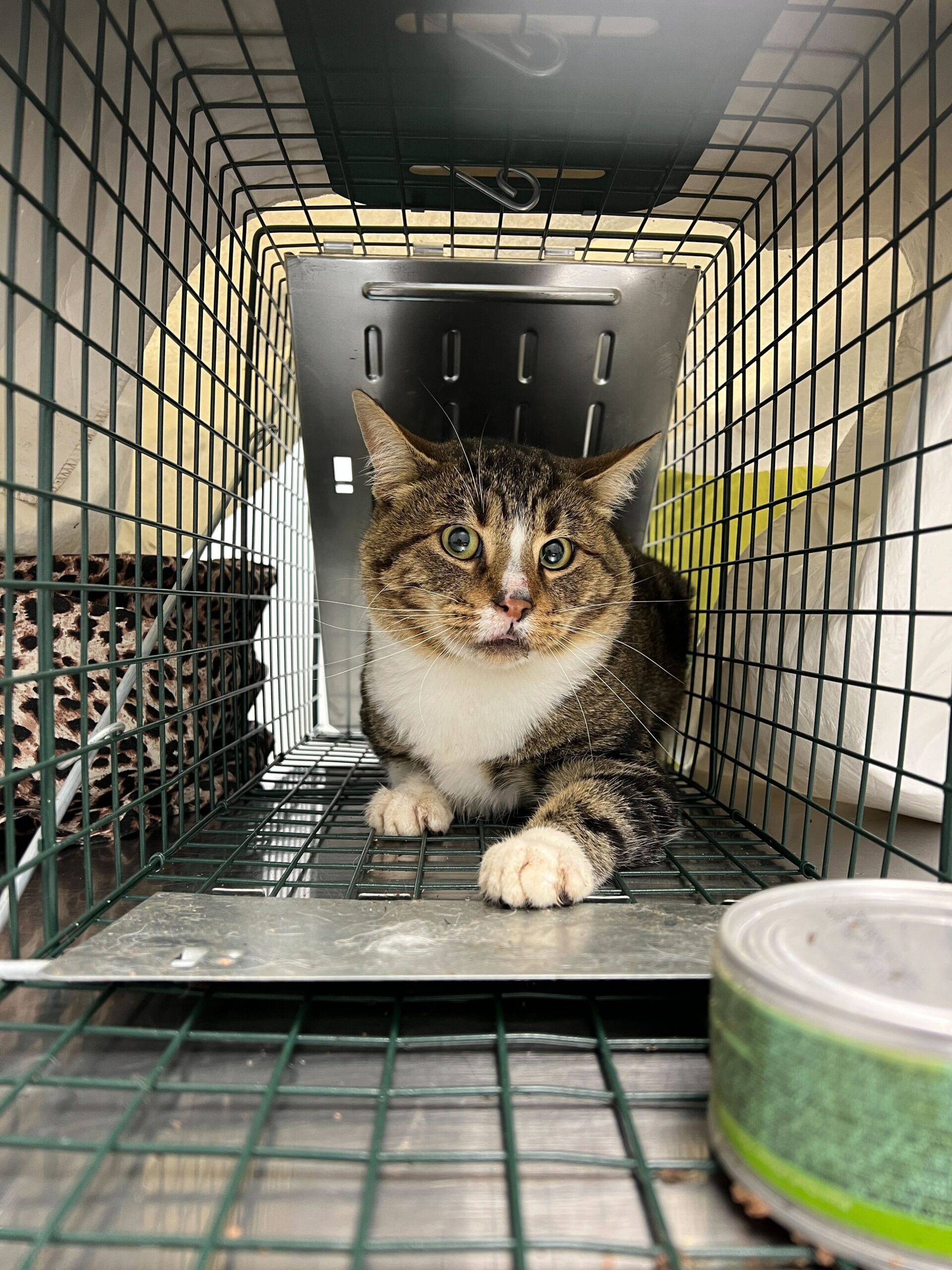
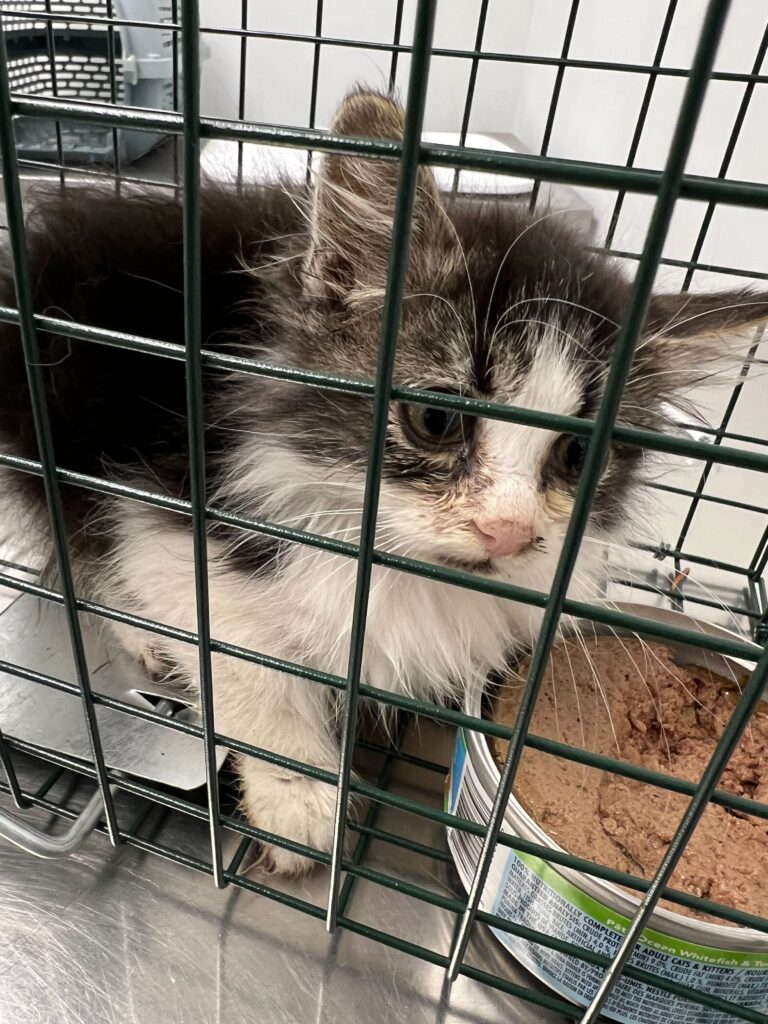
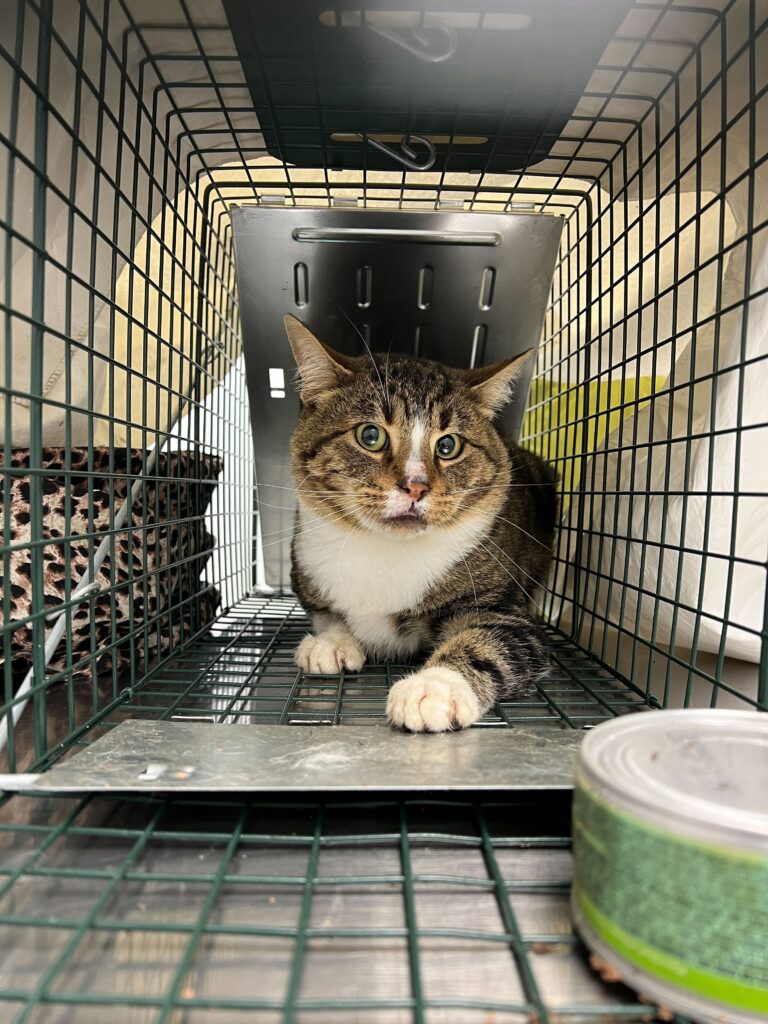
    A kitten we recently pulled from a TNR site in the trap still before being reuinited with his brother.

    Across the Fraser Valley and throughout Canada, community cat overpopulation is not a “cat problem”—it is a municipal infrastructure problem, a public health problem, and a budgetary problem. As someone who works hands-on with the consequences every day, I see the same pattern in city after city: when local governments fail to invest in accessible spay/neuter and Trap-Neuter-Return (TNR), companion animals, residents, and taxpayers all pay the cost.

    But when municipalities partner with grassroots organizations—especially charities like ours that already do the work with minimal overhead—communities see measurable, long-term returns on that investment. This is not speculation. It is evidence-based, cost-effective public policy.


    Why Spay/Neuter Is Essential: Health, Welfare & Population Stability

    For non-human animals, spaying or neutering is one of the single most impactful interventions we can provide. The benefits are well-documented:

    • Reduced risk of disease, including pyometra, testicular cancer, mammary cancer, and infections.
    • Decreased behaviours that lead to injury, roaming, and car-strike risk.
    • Improved overall welfare, especially for free-roaming and community cats who reproduce rapidly under stressful and resource-scarce conditions.

    Unsterilized cats can reproduce at exponential rates—one intact female can produce over 100 kittens in her reproductive lifetime, and her offspring compound the cycle. Without intervention, this creates a pipeline of kittens entering shelters, rescues, municipal intake systems, and public spaces. This is preventable.


    TNR: The Only Evidence-Based Method for Population Reduction

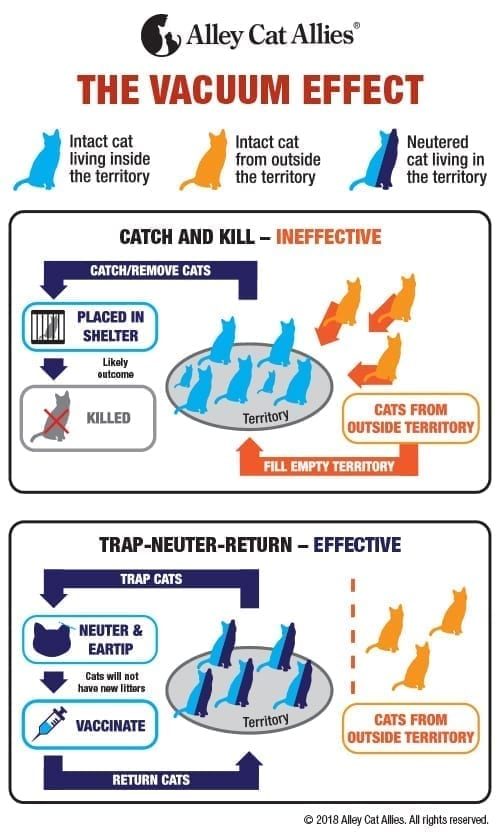
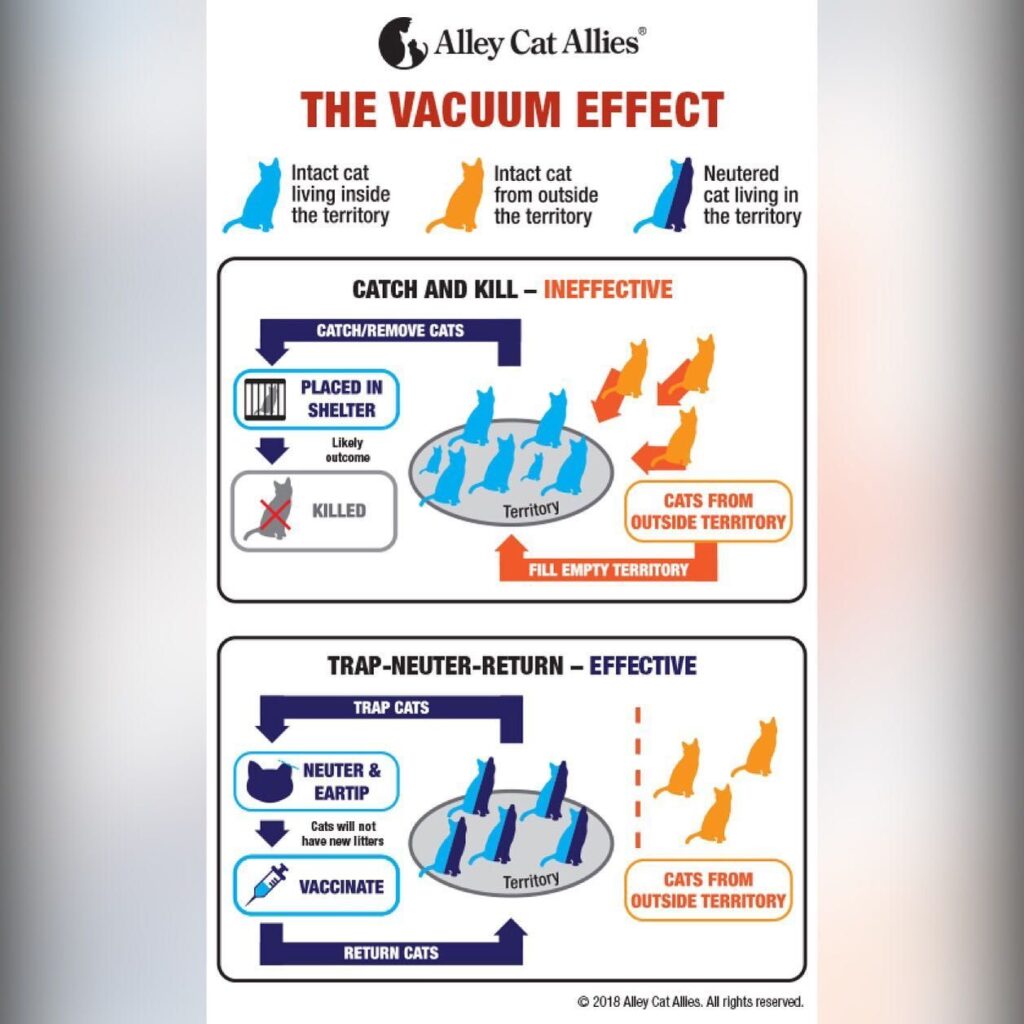
    TNR—Trap, Neuter/Spay, Return—is proven to stabilize and reduce colony populations over time. When adult cats are sterilized and returned:

    • They no longer reproduce.
    • They maintain territory, preventing unsterilized cats from moving in (the “vacuum effect”).
    • Colony size declines naturally through attrition.

    Jurisdictions across North America—from Los Angeles to Jacksonville to Toronto—have found that TNR reduces shelter intake, decreases euthanasia rates, and dramatically lowers municipal animal control costs. Doing nothing costs far more in the long run.


    The Fiscal Case: Spaying/Neutering Saves Municipalities Money

    Municipalities often don’t track the true annual cost of unmanaged cat populations, but evidence from other regions paints a clear picture: proactive spay/neuter programs are significantly cheaper than reacting to continual overpopulation.

    Key findings from comparative municipal studies include:

    1. Shelter Intake & Euthanasia Costs Drop Dramatically

    Cities that subsidize S/N and fund TNR consistently report:

    • 30–90% reductions in intake
    • 40–95% reductions in euthanasia
    • Lower staffing and operational costs

    Fewer animals entering the municipal system = fewer taxpayer dollars spent.

    2. Animal Control Operations Become More Efficient

    Without TNR, municipalities spend endless cycles:

    • Responding to nuisance calls
    • Picking up litters
    • Removing, transporting, housing, and often euthanizing cats

    TNR breaks the cycle and reduces complaints long-term.

    3. Public Health Costs Decline

    Spay/neuter reduces:

    • Feline fights and bite incidents
    • Roaming behaviours
    • Environmental impacts (waste, noise, predation)
    • Disease transmission within colonies

    Healthier, fixed cat populations produce fewer bylaw enforcement calls and fewer public health interventions.

    4. Municipal Support Leverages Massive Volunteer Labour

    Every dollar municipalities invest is multiplied by nonprofits and volunteers who do the trapping, transporting, housing, education, and aftercare work.

    This is the most cost-efficient public-private partnership a city can adopt.

    https://youtube.com/shorts/3f6hH1Ls9m8?feature=share
    Abby Cat Daddy Volunteers releasing three recently TNR’d girls back to their home.

    A Local Government Responsibility—Not a Luxury

    Organizations like Abby Cat Daddy absorb enormous costs that should not fall solely on charities:

    • Spay/Neuter surgeries
    • Emergency veterinary care
    • Fostering and socializing kittens born in unmanaged colonies
    • Feeding community cats
    • Colony cleanup
    • Medications, vaccines, microchipping
    • Volunteer coordination, education, and public support
    • Intake management from residents who have nowhere else to turn

    Municipalities benefit directly from all of this work—yet most contribute nothing financially.

    This is not sustainable.

    Local governments regularly budget for:

    • Waste removal
    • Traffic management
    • Parks and recreation
    • Rodent control
    • Stormwater systems

    Animal population management deserves the same recognition because it produces the same essential outcome: community stability and public safety.


    What Municipalities Should Do

    ✅ Fund targeted spay/neuter for low-income residents

    Allowing cost to be a barrier guarantees continual population growth.

    ✅ Allocate annual funding to nonprofits performing TNR

    Even $25,000–$50,000 per year can fix hundreds of cats and prevent thousands of births.

    ✅ Build municipal–nonprofit partnerships

    Nonprofits already have the infrastructure, training, and community trust. Cities simply need to resource them.

    ✅ Track data and measure impact

    Shelter intake, complaint calls, and bylaw utilization all decrease after investing in S/N.


    The Bottom Line

    Spay/neuter and TNR are not “animal issues”—they are public systems issues with clear operational and financial outcomes. Local governments can continue paying for the symptoms of overpopulation year after year, or they can invest in the solution.

    Organizations like ours are already doing the work. We are already reducing municipal burdens. We are already saving taxpayer dollars.

    But we cannot hold the line alone.

    It’s time for municipalities to invest in community-level spay/neuter and TNR as essential public infrastructure. The returns—ethical, environmental, and fiscal—are undeniable.


    References

    Peer-Reviewed & Government Data

    Municipal Reports Demonstrating Cost Savings